
The AI Logistics Revolution: DHL’s Bold Leap Forward
What does it take to reinvent a century-old industry while operating at massive scale across the globe? In 2024, DHL, the undisputed titan of logistics, is demonstrating how artificial intelligence in logistics management can rewrite the rules of supply chain management from the ground up. As online shopping surges, consumer expectations spike, and everything from global disruptions to climate concerns intensifies pressure on delivering goods efficiently, DHL has embraced an ambitious, data-driven transformation fueled by AI-powered supply chain optimization investments exceeding $700 million. Their pioneering work stretches from predictive analytics for supply chain forecasting that forecast demand with up to 40% fewer errors to warehouse automation robotics that boost productivity by 35% and order accuracy to an astonishing 99.7%, all while reshaping job roles and company culture in the moving gears of their worldwide operations. For business leaders and technologists alike, DHL’s journey is much more than logistics news it’s a masterclass on aligning cutting-edge AI innovation with enterprise-scale complexity to create resilient, agile networks fit for the future.
Why Now? The Perfect Storm Demanding AI
A few years ago, supply chains worked on incremental efficiencies and manual oversight. But the pandemic disrupted that paradigm, exposing vulnerabilities in global networks and catalyzing explosive growth in e-commerce that traditional systems simply cannot sustain. Thousands of warehouses and fleets struggling simultaneously with unpredictable consumer behavior, regional shutdowns, and heightened delivery speed requirements: this is the modern logistics puzzle DHL faces daily. Over 60% of supply chain leaders now cite AI maturity in supply chain management as a critical success factor, according to a 2023 Gartner survey, and DHL’s $737 million robotics rollout in the UK and Ireland alone is a bold snapshot of how seriously they take this. They’re not just experimenting; they are rewriting the playbook.
AI logistics platforms aren’t simply a new tool; they represent an entire operational mindset shift. By combining machine learning models for supply chain with robotics and real-time data inputs, DHL is orchestrating an ecosystem where warehouses auto-adjust in response to market signals, fleets self-diagnose maintenance needs, and delivery routes optimize themselves instantaneously based on traffic and weather. In this way, AI moves from buzzword to backbone, enabling DHL to do more than keep pace it lets them thrive amid chaos.
Precision Forecasting: The Cornerstone of Smarter Supply Chains
DHL’s adoption of advanced AI-powered predictive analytics for demand forecasting. Traditional forecasting often stumbles over its inability to adapt quickly to demand volatility, leading companies to either overstock and inflate holding costs or risk costly shortages. DHL’s AI models ingest vast datasets international order flows, shifting market indicators, historical shipping patterns and generate forecasts with 30-40% less error than conventional methods. This leap forward is not just a statistical win; it’s a scalable asset that improves inventory balance across thousands of warehouses.
Warehouse managers report faster turnaround times precisely because AI helps maintain inventory at optimized levels, neither overwhelming storage space nor leaving gaps that slow fulfillment. By turning raw data into actionable foresight, DHL is shrinking costly waste while accelerating delivery two outcomes that directly boost customer satisfaction and company margins.
Robotics and Orchestration: The Warehouse of Tomorrow
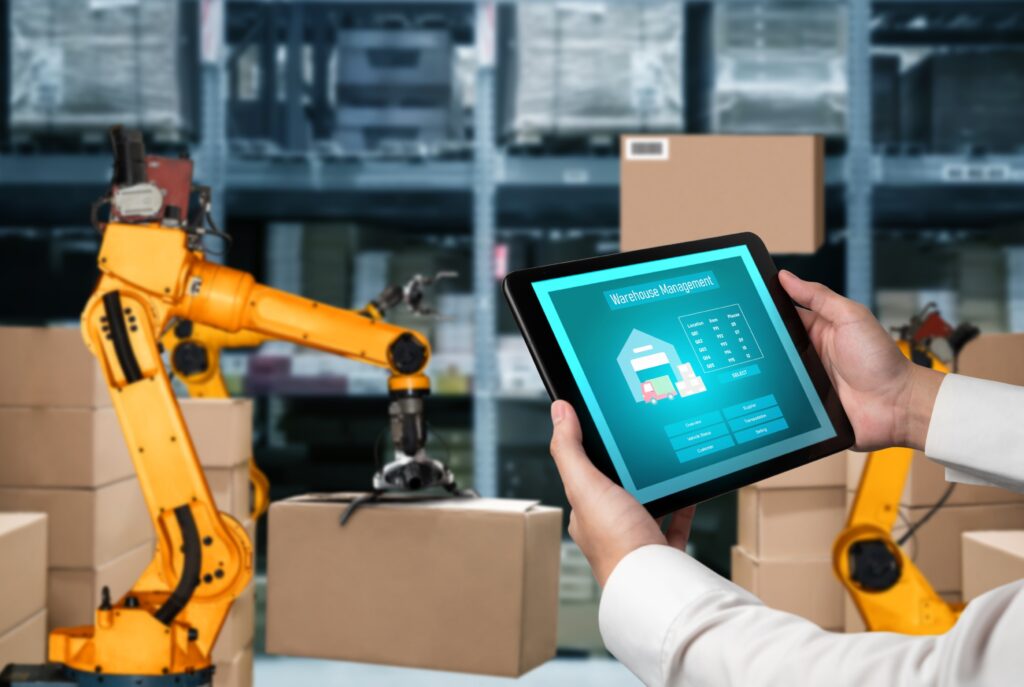
AI robotics in warehouse automation function as its agile limbs. DHL’s multi-hundred-million-dollar commitment to automation technology includes deployments of more than 1,000 intelligent robots in UK and Ireland facilities, leveraging collaborations with innovators like Boston Dynamics and Robust.AI. These aren’t your standard assembly-line machines; their AI-powered perception and robotics adaptability allow them to work side-by-side with humans on tasks ranging from heavy palletizing to nimble picking.
At the heart of this robotic revolution is an AI-based orchestration platform that integrates various automation systems and real-time data, coordinating activities seamlessly across the facility. The outcome: warehouse productivity leaps by 35%, order accuracy climbs to 99.7%, and processing delays shrink substantially. This blend of human intuition and robotic precision transforms logistics centers into smart, responsive hubs where each cog human or machine operates with maximum efficiency and minimal friction.
The cultural shift accompanying this physical transformation. DHL’s proactive workforce retraining programs don’t treat AI as a threat but as a collaborator, reskilling employees to supervise automated systems, handle exceptions, and guide continuous improvement. As a result, worker satisfaction and safety rise alongside throughput, illustrating how thoughtfully applied AI doesn’t displace labor but elevates human potential within the supply chain’s intricate ballet.
Autonomous Fleets and Predictive Maintenance: AI on the Move
The innovation doesn’t stop inside warehouses. On roads stretching across continents, AI fleet management solutions steer DHL’s fleets toward unprecedented reliability and efficiency. By feeding sensor data into machine learning algorithms for predictive maintenance, the company predicts mechanical failures before they occur, scheduling maintenance preemptively to avoid expensive downtime. This proactive approach smooths delivery flow across regions and slashes repair costs.
Meanwhile, pilot programs for autonomous delivery vehicles powered by AI are underway, harnessing AI to optimize last-mile routes dynamically. These systems analyze real-time traffic, weather, and delivery priorities, adjusting paths to minimize fuel consumption and transit durations. While still evolving, early results demonstrate the promise of combining autonomy with AI-driven logistics orchestration to cut both carbon footprint and operational expenses an increasingly critical pivot as supply chains grow more conscious of sustainability.
Cultural Transformation: Human and AI Synergy
DHL’s AI journey underscores a fundamental truth: successful innovation requires cultural evolution. The company recognizes that blending human insight with AI-driven automation demands continuous learning, open mindset shifts, and embracing AI as a partner rather than a replacement. Comprehensive training initiatives empower thousands of employees to transition from routine labor to system oversight and complex decision-making.
This human-AI synergy is not merely a productivity hack; it’s a strategic multiplier. DHL’s target of doubling workforce productivity by 2025 hinges on this balance, where human creativity and problem-solving complement AI’s speed and precision. Leaders emphasize that sustained C-suite sponsorship and transparent cross-team collaboration have been vital to embed AI holistically into DHL’s operational fabric. The outcome is a resilient, future-ready workforce that sees AI as an extension of their skills a powerful stance amid uncertainty.
Measurable Impact: Proof in Numbers
DHL’s AI overhaul translates into concrete operational gains that rival the most ambitious industry benchmarks. By slashing forecast errors by up to 40%, inventory is leaner and capital freed for strategic reinvestment. Warehouse automation lifts productivity by 35% and slashes shipping errors to almost zero, with order accuracy peaking at 99.7%. Predictive maintenance diminishes fleet downtime notably, contributing to millions in annual savings, while autonomous routing pilots improve fuel efficiency and delivery speeds.
Beyond cost and speed, these improvements enable DHL to expand service offerings and geographic reach more aggressively, pivoting with market shifts rather than reacting belatedly. The anticipated doubling of workforce productivity underscores AI’s role not as a substitute but as a force multiplier, amplifying human capabilities while sculpting a new standard of operational excellence.
Looking Forward: The Future of AI in Logistics
What lies beyond 2025 in DHL’s AI roadmap is a vision of further scaling robotics deployments globally and deepening AI orchestration across multi-modal supply chains. Emerging technologies like edge AI analytics for real-time decision-making promise to bring autonomous control even closer to dynamic operational hubs around the world. Ethical AI governance frameworks and ongoing workforce development ensure that innovation aligns with responsible business values and human-centered design.
DHL’s comprehensive AI blueprint offers logistics leaders a beacon amid rising complexity: success depends on harmonizing technology, strategy, and culture to build supply chains that are not just efficient but intelligent, adaptable, and humane. In an environment demanding ever-greater resilience and agility, this holistic approach sets a benchmark, proving that the future of logistics belongs to those who master both machines and the humans who guide them.
DHL’s AI story is a powerful illustration that the future of logistics is not merely automated or high-tech it’s human-centered and thoughtfully engineered. Sophisticated algorithms translate oceans of data into decisive foresight, robotics extend human reach with precision, and a purpose-driven culture cultivates a workforce that collaborates dynamically with intelligent machines. For any enterprise navigating the scaling challenges of supply chain digitization, DHL’s journey offers a clarion call and a comprehensive playbook: the smartest networks will be those that seamlessly fuse people and AI into a single, unstoppable force.