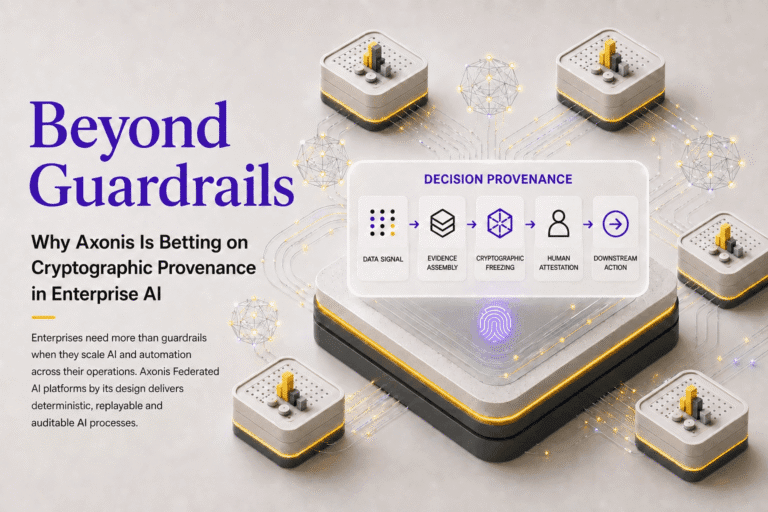
This guide shows business leaders how to move from isolated pilots to organization-wide AI transformation that delivers real, measurable impact.
- Summary
Summary
- Core Idea
Core Idea
- Misconceptions
Misconceptions
- Practical Use Cases
Practical Use Cases
- Decision Framework
Decision Framework
- Success Signals
Success Signals
- Executive Pitfalls
Executive Pitfalls
- AI Evolution
AI Evolution
Learning Objectives
After reading this article you will be able to:
The Core Idea Explained Simply
The Core Idea Explained in Detail
Common Misconceptions
Practical Use Cases That You Should Know
How Organizations Are Using This Today
Talent, Skills, and Capability Implications
Build, Buy, or Learn? Decision Framework
What Good Looks Like (Success Signals)
What to Avoid (Executive Pitfalls)
How This Is Likely to Evolve
Final Takeaway
TL;DR — Executive Summary
AI has moved beyond experiments into core business operations. By 2026, it will reshape business models, margins, and competition.
Surveys from McKinsey’s State of AI and BCG’s 2025 analysis highlight a divide. A few AI leaders achieve double-digit productivity boosts in documents, development, and operations. These organizations also report revenue growth from AI-powered products. Most others remain stuck in pilots with limited results.
Governance, data preparation, and skills gaps block progress, not the tech itself.
Executives must integrate AI as a fundamental part of business and operating models. Treat AI platforms, data, and agents as enterprise-wide resources. Deploy governance frameworks like NIST AI Risk Management, OECD Principles, and EU AI Act controls to balance speed and safety.
This guide covers the meaning of an AI-driven organization. It details how leaders apply AI to strategy and operations. It outlines key capabilities, structures, and decisions needed by 2026.
The Core Idea Explained Simply
An AI-driven organization embeds AI in value creation, operations, and decisions.
AI is baked into how the business creates value, runs its operations, and makes decisions—not sprinkled on top of existing processes.
This involves three key shifts.
- Strategy:
Design where to play and how to win with AI and data ready for better products, economics, and decisions like personalization or lower costs. - Operating model:
Develop shared AI and data platforms for all units.
Include central models, data access, AI patterns, and governance.
Redesign workflows so humans and AI collaborate effectively. - Culture and capabilities:
Ensure teams use AI daily and grasp its risks.
Implement ongoing learning through measurement, tuning, and retirement of ineffective elements.
The idea goes beyond basic generative AI use.
Make AI and data integral to how your organization thinks, decides, operates, and grows.
The Core Idea Explained in Detail
1. From “Digital Transformation” to “AI-Driven Transformation”
Digital transformation digitized existing work. It shifted paper to files, moved to cloud, automated rules-based tasks, and added mobile interfaces.
AI-driven transformation builds on this with advanced abilities. Perception lets machines process documents, images, video, and audio. Language handling enables natural writing, summarization, and conversation. Prediction optimizes forecasts, pricing, and inventory.
Generation supports creative outputs like text, code, or designs for human review. Agency allows agents to manage multi-step tasks across systems.
The core question evolves. Instead of digitizing the old way, ask how AI capabilities would redesign products, processes, or the entire business from the ground up.
2. The AI-Driven Operating Model
Successful AI adopters follow a four-layer model.
- Business strategy and value layer
Set priorities on AI’s value areas like service, pricing, or operations.
Focus on key customer and employee challenges. - Use-case portfolio and product layer
Maintain a portfolio of AI products such as copilots for service or sales.
Assign owners, KPIs, and roadmaps to each. - AI & data platform layer
Deliver shared tools including governed data lakes and model access.
Add agent frameworks, evaluation, and monitoring.
Integrate with cloud and open sources for scalability. - Governance and risk layer
Align policies with NIST AI Risk Management Framework: https://www.nist.gov/itl/ai-risk-management-framework
Incorporate OECD AI Principles: https://www.oecd.org/en/topics/sub-issues/ai-principles.html
Follow EU AI Act for EU work.
Tier risks, set approvals, document models, and plan responses.
The flow runs from strategy to portfolio, platform, and governance. Feedback loops connect them for iteration.
3. Frameworks and Maturity Models
Frameworks across consultancies outline similar paths. AI maturity models progress from ad-hoc trials to centralized platforms and full integration.
McKinsey’s Rewired approach covers strategy, talent, operations, tech, data, and scaling. AI business canvases grid use cases by value, feasibility, and risk.
These tools offer structure. Assess your current state in strategy, platforms, talent, culture, and governance.
Project forward to 2026-2028 based on industry and rivals. Identify gaps and prioritize.
Common Misconceptions
“AI Strategy = Buying a Model or Tool”
Models and tools serve as components, not the full strategy. A robust plan covers economic shifts from AI, priority problems, organization, governance, and staffing.
Without data, adoption, and risk plans, purchases yield flashy pilots with small returns. Strategy requires integrating these elements for lasting impact.
“We Can Wait Until the Technology ‘Settles Down’”
Foundational elements like data, platforms, governance, and talent design stand firm today. Specific models evolve, but principles do not.
Delaying forfeits learning and competitive edge. Early builders gain practical experience now.
“AI Is Mainly About Cost-Cutting and Headcount Reduction”
Efficiency hits 20-30% in coding, support, and documents, per McKinsey data. Leaders extend this to new products, segments, and personalization.
Framing AI solely as cuts sparks resistance and limits creativity. Focus instead on amplifying teams’ output and evolving roles gradually.
“We Need to Bet Everything on One Big ‘Moonshot’”
Big bets fit portfolios alongside smaller, proven use cases like copilots or analytics. This mix spreads risk and builds proof.
Portfolios sustain momentum through quick wins and bolder moves.
“Governance Slows Us Down Too Much”
No governance invites shadow AI, inconsistencies, and risks like privacy breaches or biases. Effective setups accelerate safe use.
Define fast tracks for low-risk items and reviews for high-risk ones. Position governance as an enabler from the start.
Practical Use Cases That You Should Know
Below are representative use cases, framed for strategy and transformation, not just technology.
1. Enterprise “Copilots” for Knowledge Work
What they are
- Role-specific assistants integrated into:
- Email, office suites, CRM, ERP, HRIS, ticketing tools.
- Examples:
- Sales copilot suggesting next best actions, drafting outreach, summarizing accounts.
- Service copilot summarizing tickets, proposing replies, surfacing knowledge articles.
- Legal/Compliance copilot summarizing regulations and case law, drafting clauses.
Value
Boost productivity for expensive knowledge roles. Ensure consistent outputs and records. Cut new hire ramp-up time.
Strategic angle
Expand team capacity without proportional hiring. Support scalable growth.
2. AI-Enhanced Customer Experience and Personalization
What it is
AI analyzes user behavior and context to tailor content, recommendations, and interactions.
Examples
- Retail/e-commerce:
- Personalized homepages and marketing based on history and real-time events.
- Banking:
- Next best product/offer with improved risk assessment.
- Telecom:
- Proactive retention offers based on churn models.
Strategic angle
Lift conversions and customer value. Create experiences hard for rivals to replicate without matching infrastructure.
3. AI for Operations and Supply Chain
What it is
AI handles forecasting, optimization, vision tasks, and agent workflows. It predicts demand, tunes inventory, routes dynamically, inspects quality, monitors safety, and automates alerts.
Strategic angle
Cut costs and variability. Build disruption resilience. Enable agile responses.
4. Finance, Risk, and Compliance Transformation
Use cases
- AI-assisted month-end close and reconciliations.
- Automated analysis of anomalies and risks.
- Document processing for:
- KYC (Know Your Customer).
- AML (Anti-Money-Laundering).
- Regulatory filings.
Strategic angle
Shift focus to predictive insights. Enable quicker planning cycles.
5. HR and People Strategy
Use cases
- Talent acquisition:
- Smarter sourcing.
- Screening assist (with strict bias controls).
- Internal mobility and skills mapping:
- Matching people to roles and projects.
- Personalized learning paths.
- Engagement and support:
- Internal HR assistants for policy Q&A and process navigation.
Strategic angle
Improve planning and allocation. Boost mobility and skills in changing environments.
6. Strategy, Competitive Intelligence, and R&D
Use cases
- Market and competitive intelligence:
- Agents monitoring news, filings, patents, social signals.
- Curated briefings for different leadership roles.
- R&D support:
- Literature review.
- Hypothesis generation.
- Design space exploration (materials, chemistry, algorithms).
Strategic angle
Accelerate market awareness and reactions. Democratize insights beyond small teams.
How Organizations Are Using This Today
Typical Journey
- Grassroots experimentation
Employees adopt public tools like ChatGPT, Gemini, or Claude.
Initial pilots emerge in marketing, support, and IT. - First structured pilots and policies
Draft basic data policies for public tools.
Launch focused pilots like support drafting or developer aids. - Central platform and governance formation
Form an AI Center of Excellence or platform team.
Deploy multi-model platforms, RAG, monitoring, and frameworks like NIST AI RMF or OECD Principles. - Scaling and operating-model change
Transition pilots to a portfolio with owners and KPIs.
Emphasize reuse through shared components and templates. - Strategic repositioning
Apply learnings to redesign journeys, roles, and offerings.
Patterns of Success vs. Stagnation
- Leaders:
Link AI to goals like faster cycles or margin growth.
Fund platforms, change efforts, and risk handling.
Track and share wins to maintain drive. - Laggards:
View AI as IT or PR only.
Skimp on data, skills, and controls.
Remain in endless proofs of concept.
Talent, Skills, and Capability Implications
Leadership and Management Skills
- AI-literate leadership
Grasp AI’s strengths, limits, and scaling challenges.
Probe risks, returns, and preparation effectively. - Portfolio and product thinking
Oversee AI as interconnected efforts with defined ownership, metrics, and decisions. - Change leadership
Explain AI’s role, role shifts, and support plans.
Address resistance, gaps, and ethical worries.
Technical and Hybrid Roles
- AI / ML engineers and data scientists
Develop and refine models and agents with domain input. - Platform / MLOps / ModelOps engineers
Manage serving, RAG, observability, and pipelines. - AI product managers
Bridge goals, UX, and tech for roadmaps and metrics. - AI translators / domain experts
Connect business needs to AI for use case definition and validation.
Governance and Risk Roles
- Responsible AI / AI governance leads
Craft policies, risks, and processes across functions. - Security and privacy specialists with AI focus
Tackle threats like injections or exfiltration.
Integrate with cyber and data rules like GDPR.
Capability Building
Success demands wide literacy training for managers and workers. Foster communities for engineers, managers, and experts. View building as continuous, not isolated events.
Build, Buy, or Learn? Decision Framework
For an AI-driven transformation, the real question is not “should we build or buy AI?”; it’s:
- What do we build in-house as strategic capability?
- What do we buy or partner for?
- Where do we need to learn and adapt fastest?
Think across three dimensions: platform, solutions, and skills.
1. Platform: Build vs. Buy
Buy / adopt (cloud AI platforms and SaaS)
- Use:
- Cloud AI platforms (Azure, AWS, Google Cloud).
- SaaS tools with embedded AI (CRM, ERP, HRIS, productivity suites).
- Pros:
- Fast time-to-value.
- Less infrastructure burden.
- Cons:
- Vendor lock-in.
- Less control over models and data flows.
- Harder to differentiate purely on tools.
Build (AI platform on top of cloud + open components)
- Build:
- A central AI platform/“fabric” that:
- Integrates multiple model providers.
- Implements your own RAG and agent layers.
- Provides standard APIs to business units.
- A central AI platform/“fabric” that:
- Pros:
- Strategic control.
- Flexibility to switch models and vendors.
- Stronger alignment with internal governance.
- Cons:
- Requires sustained investment and engineering talent.
Practical stance for most
Leverage vendors for basics. Layer custom orchestration for control and edge cases.
2. Solutions: Custom vs. Off-the-Shelf
Off-the-shelf AI solutions
Systems like CRM or ERP now include copilots and analytics. Apply them to routine processes without unique edges.
Custom AI solutions
Develop where advantages lie in processes, data, or compliance needs.
3. Learn: Where to Invest Heavily
Own strategy, portfolio, data quality, governance, and change regardless of sourcing. These drive unique advantages. Vendors handle tactics, but core adaptation stays internal.
What Good Looks Like (Success Signals)
How do you know you’re on track to become an AI-driven organization?
Strategy and Portfolio
- AI features prominently in corporate strategy with dedicated themes.
- Maintain a prioritized portfolio tracking stages and criteria for progression or cuts.
Platform and Architecture
- Deploy a multi-model platform with RAG, access, and monitoring.
- Enable business teams to extend it without silos.
Governance and Risk
- Align frameworks to NIST, OECD, and rules like EU AI Act.
- Tier risks with tailored controls and oversight.
Talent and Culture
- Leaders explain AI’s place confidently.
- Train staff on use, review, and reporting.
- Form cross-functional teams and enable role shifts.
Outcomes
- Track gains in productivity, quality, revenue, or margins.
- Report transparently to leaders, boards, and regulators.
Progress across these builds lasting capability.
What to Avoid (Executive Pitfalls)
1. The “Pilot Purgatory” Trap
Symptom:
Many AI pilots.
No scaled deployments.
No significant P&L impact.
Cause:
Lack of clear success metrics and ownership.
No path from experiment to platform.
Fix:
Treat pilots as experiments with hypotheses:
“If we do X, we expect Y impact in Z months.”
Require:
Measured results.
Clear scale plan or sunset decision.
2. Overcentralization or Overfragmentation
Overcentralization:
One small central team blocks everything.
Overfragmentation:
Each BU builds its own incompatible AI stack.
Fix:
Centralize:
Platforms.
Standards.
Governance.
Federate:
Use-case ownership.
Domain-focused AI product teams.
3. Treating AI as Just Another IT Project
Symptom:
AI initiatives run solely through IT without:
Business co-ownership.
Change management.
Outcome:
Solutions that technically work but aren’t adopted.
Fix:
Make major AI initiatives jointly owned by:
Business.
Technology.
Risk.
4. Ignoring Risk Until Something Goes Wrong
Pitfall:
No structured approach to:
Bias, fairness, and explainability.
Data protection and IP.
Safety-critical failures.
Consequence:
Reactive firefighting.
Regulatory and reputational problems.
Fix:
Build risk assessment and mitigation into:
Ideation and design.
Development.
Deployment and monitoring.
5. Underestimating Data Work
Pitfall:
Assuming “smart models” will overcome messy, siloed data.
Reality:
Poor data quality and access is a leading cause of AI underperformance.
Fix:
Invest in:
Data cataloging.
Semantic models.
Data pipelines and stewardship.
Make data a board-level asset, not an IT afterthought.
6. Over-relying on Vendors’ Roadmaps
Pitfall:
Assuming vendors will:
Solve your strategy.
Handle all risk.
Keep your economics favorable.
Fix:
Maintain:
Multi-vendor options where feasible.
Your own performance and risk evaluations.
A clear view of what must remain in-house expertise.
How This Is Likely to Evolve
Between now and 2026–2030, several trends will shape AI-driven transformation:
1. From Models to Systems and Agents
- Focus will shift from:
- “Which model is best?”
- To:
- “How do we design systems of humans, models, agents, and processes that deliver outcomes reliably?”
- Agentic systems will:
Take on more complex workflows.
Demand stronger:- Oversight.
- Auditability.
- Tool and permission design.
2. Economics: Commoditization and Differentiation
- Base model capabilities are converging and commoditizing:
- More strong open-weight and region-specific models.
- Differentiation will sit more in:
- Proprietary data and knowledge.
- Process design and integration.
- Governance, trust, and user experience.
3. Regulation and Social Expectations
- Regulatory frameworks will:
- Become more concrete and prescriptive for:
- High-risk uses.
- Frontier models.
- Sector-specific domains (financial, health, critical infrastructure).
- Become more concrete and prescriptive for:
- Expectations for:
- Transparency.
- Accountability.
- Fairness.
- Will grow, not shrink.
4. Organizational Design
Embed AI into all functions. Establish platform and governance teams like established units. Update roles to include AI use and literacy.
For executives, design modular, governed, adaptive systems. Current investments in platforms, talent, and culture form the base for future shifts.
Final Takeaway
AI transformation is essential in competitive, data-heavy sectors. The choice is between leading with AI advantages or lagging behind.
Anchor on business outcomes over trends. Build platforms and portfolios for reuse and measurement. Prioritize people, data, and controls as key assets. Embrace continuous learning as core to the shift.
Deliberate action now positions organizations for a more agile 2030s.
Related Articles
Get AI Business Magazine Free for 3 Month
-
Access all issues of AI Business Magazine -
Digital copy delivered monthly via email -
No credit card required