
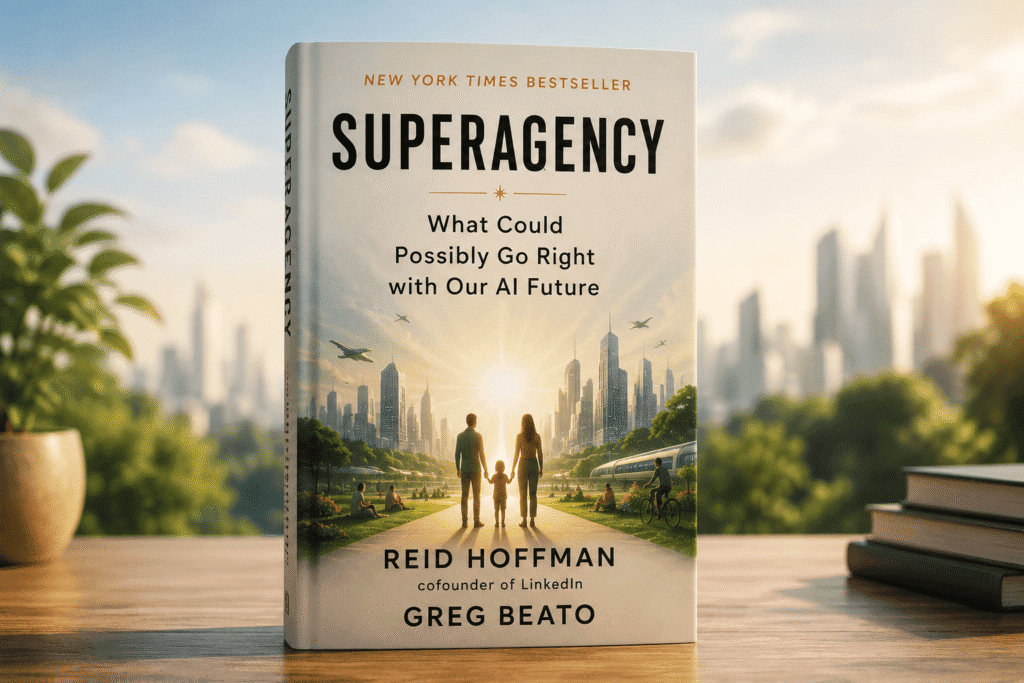
The article discusses the book 'Superagency,' which presents an optimistic perspective on artificial intelligence, emphasizing its potential to enhance human capabilities and solve global issues. It advocates for responsible AI development and collaboration across sectors to ensure AI serves as a tool for empowerment rather than competition.
- The fate of AI is influenced more by human choices than technology.
- Cooperation among governments, businesses, and researchers is crucial for positive AI impacts.
- AI has the potential to enhance creativity, productivity, and problem-solving abilities in humans.
Superagency: The Future of Artificial Intelligence and Its Possibilities offers a positive and insightful viewpoint on artificial intelligence, focusing not on its threats but on its potential to improve human capabilities, speed up the process of innovation, and help solve major issues of the world. In this connection, the authors provide many examples and potential insights, arguing that AI can definitely be interpreted as a tool to aid and empower human beings rather than a rival.
Why Should Readers Read It?
This book can be an optimistic reply to negative conversations surrounding artificial intelligence. It shows how responsible AI developments can pave the way for better healthcare, education, research, and business and open doors to new possibilities for economic growth. The readers can also benefit from the book’s balanced approach to innovations and its discussion of ethical issues and regulation, which makes it interesting for both AI aficionados and Washingtonians who want to learn about AI technology.
Key Takeaways
The book’s key point is that the fate of AI relies more on human choices than technology. As a result, cooperation with governments, businesses, and researchers is necessary to ensure the positive role of AI in society. Moreover, readers come to understand that AI can enhance human creativity, productivity, and ability to solve problems while complementing, rather than replacing, human intelligence. Overall, the book suggests being open to innovations and optimistic about them.
Who is this book for?
The book is meant for business users, IT specialists, public servants, students, and other individuals interested in discovering the benefits of AI and its impact on society.
Frequently asked questions
What is the main focus of the book 'Superagency' about AI?
The book focuses on the positive potential of artificial intelligence, arguing that it can enhance human capabilities, drive innovation, and address significant global challenges.
Who should read 'Superagency'?
The book is targeted at business users, IT specialists, public servants, students, and anyone interested in understanding AI's benefits and societal impact.
How does 'Superagency' address concerns about AI?
The book presents a balanced view that counters negative narratives by showcasing how responsible AI can lead to advancements in fields like healthcare, education, and business.
What is a key takeaway regarding the relationship between humans and AI?
A central takeaway is that AI should be seen as a complement to human intelligence, enhancing creativity and productivity rather than replacing it.
What ethical considerations does 'Superagency' discuss?
The book addresses the importance of ethical issues and regulation in the development of AI, providing insights for both enthusiasts and policymakers.