
October’s tools aim to solve one problem at a time, not to reinvent the office. These five targets are social video, go-to-market deployment, browser-based agents, AI-search visibility, and the chores of a one-person business. Their launch attention is real.
Their procurement evidence is not. Product Hunt votes signal curiosity, not adoption, and a stubborn number of them still refuse to post a price.
1. Spira Maxima
What It Does
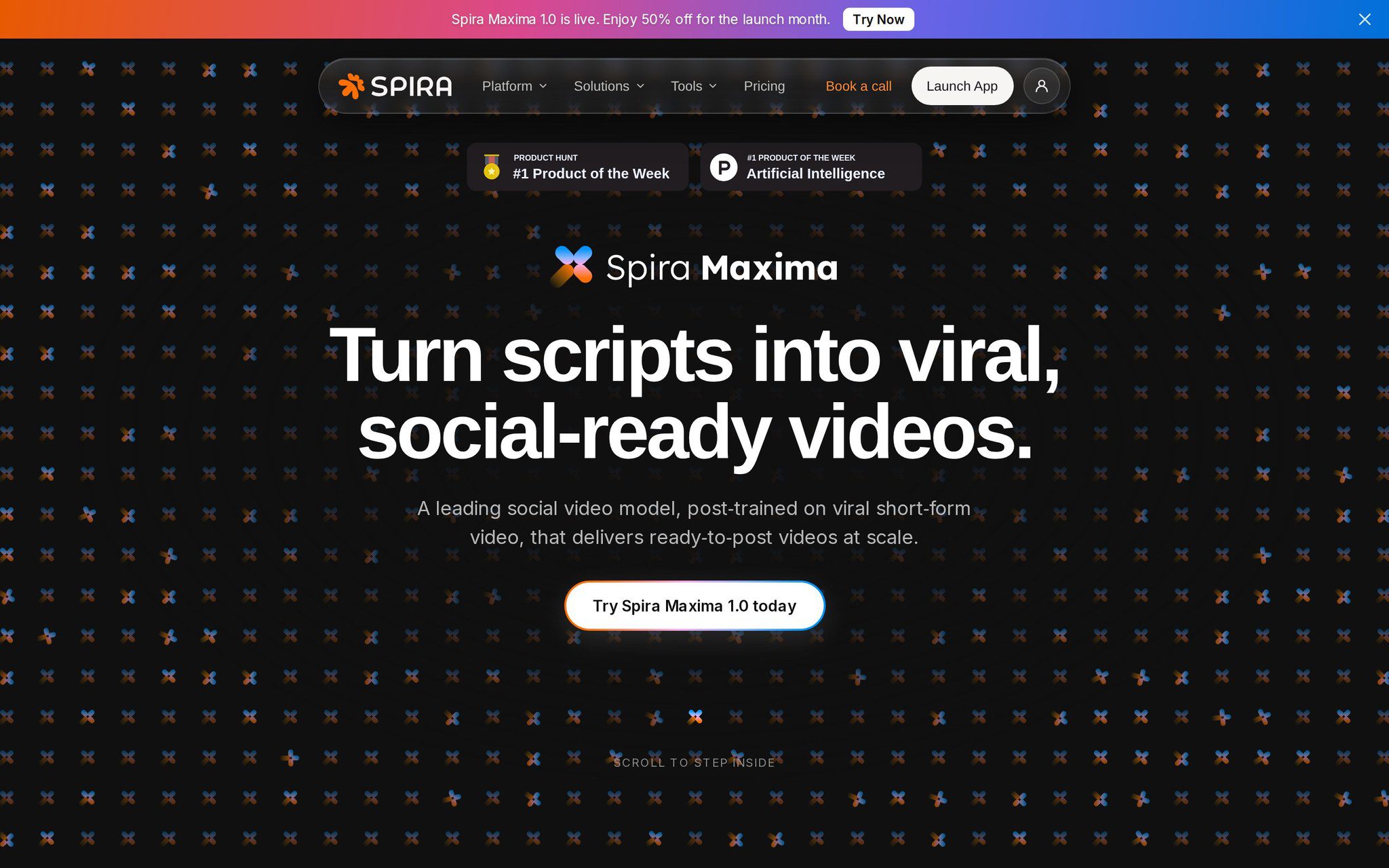
Turns a script into a finished social video, complete with an AI presenter, B-roll, captions, and music. A social team uses it to move from a written concept to a publishable clip without sourcing footage or editing.
Why It’s Trending
Its product page updated on October 27, 2026, calling the tool a ‘current social video model’. The 575 votes and 75 comments that month are a useful attention signal—just not proof that its videos perform in an actual campaign [1].
Key Features
-
Converts plain text into a social video
-
Supplies an on-screen AI spokesperson
-
Adds supporting visual B-roll
-
Places text captions on the video
-
Includes audio and uses social-performance signals to shape the final output
Best For
-
Content creators producing short-form social videos from scripts
-
Businesses creating repeatable social content for publishing
What Makes It Different
It delivers a full, social-ready production line, not just a text-to-video utility. The closest rival isn’t named in the available record; the distinction is the bundled package of presenter, footage, and trend data [2].
Pricing
Paid — no published price.
Things to Consider
-
The product is described as creating engaging or viral videos, but the available record does not establish campaign performance.
-
No stated usage allowance or export limit.
-
The record describes publishing-ready output but does not name publishing-platform integrations.
-
No published price makes budget modeling impossible.
Our Verdict
Fits content teams that need a steady flow of short videos from existing scripts, provided they can first judge the presenter’s quality and actual campaign results. The October attention is a lead, not a case study.
Try it: https://spira.ai/spira-maxima
2. Pancake

What It Does
A marketing-operations platform for finding prospects and automating go-to-market work. It gives AI agents the memory, data, and tools to run acquisition workflows, so a founder or small B2B team doesn’t have to stitch those steps together manually.
Why It’s Trending
Its main page updated on October 28, 2026, and a solopreneur page followed on November 1, sharpening the focus on lead-finding and outreach automation. The 572 votes and 72 comments show attention around a category that usually arrives as a spreadsheet [3].
Key Features
-
Provides a shared memory for marketing agents
-
Supports deployment of AI-driven strategies
-
Connects to more than 40 data providers for prospecting
-
Helps identify potential customers
-
Automates lead-finding and outreach through repeatable steps
Best For
-
Businesses automating customer acquisition for small B2B companies
What Makes It Different
It concentrates on the infrastructure around AI marketing agents, not on presenting another general-purpose chatbot. The record names Vercel as a comparison, but the narrower distinction is marketing deployment, agent memory, and that access to dozens of data providers [4].
Pricing
Paid — no published price.
Things to Consider
-
The workflow uses more than 40 data providers; buyers need to know what prospect data enters the system and where it travels.
-
The product’s value depends on its data-provider access, but the available record does not name them or other integrations.
-
Automated prospecting still requires a way to review whether targets and messages are commercially sound.
-
No published price makes per-seat or volume economics impossible to compare.
Our Verdict
Best for founders, small B2B companies, and agencies willing to pilot automated prospecting before expanding it. The deciding issue is governance around customer data and whether its provider network produces usable leads, not just more leads.
Try it: https://pancake.ai/
3. Rill Browser
What It Does
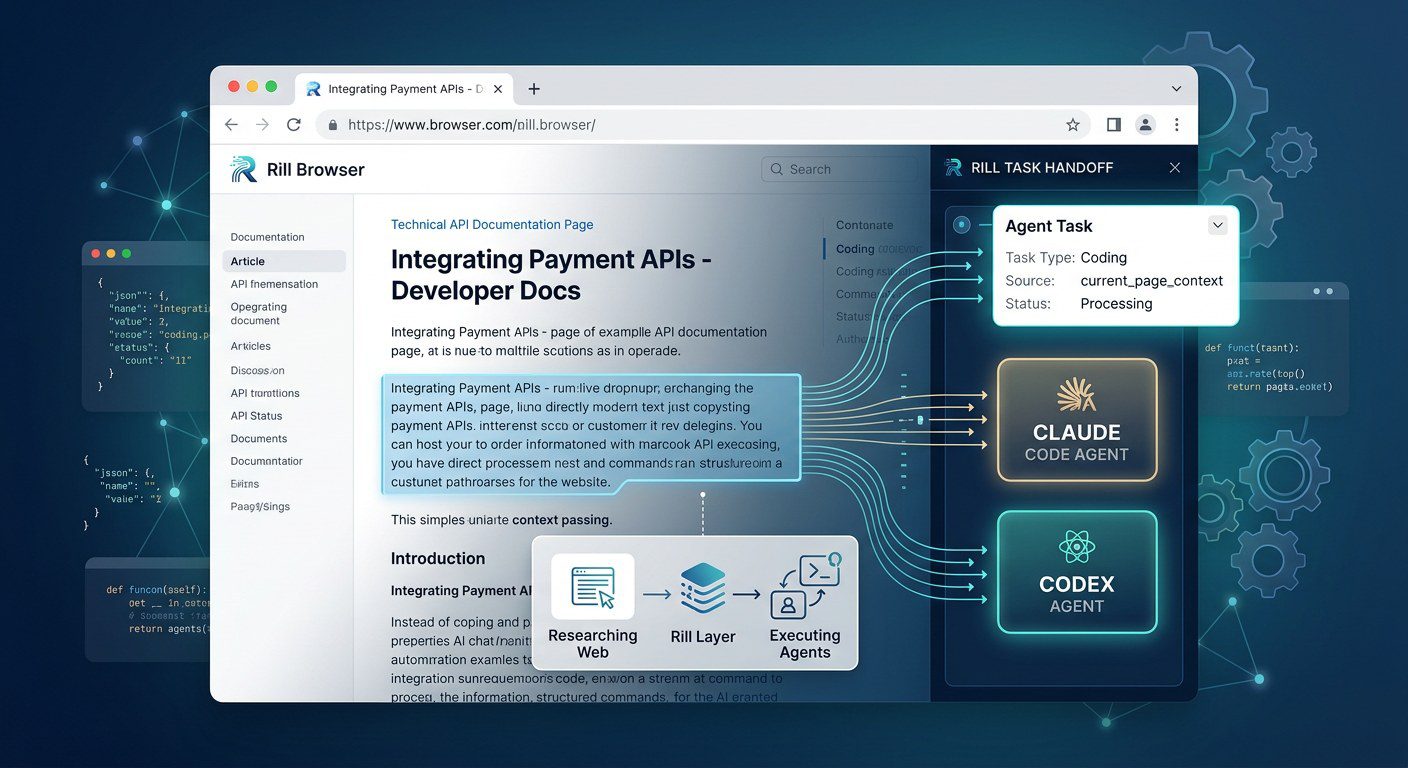
A web browser that lets you turn pages you’re viewing into tasks for AI coding agents. Browse normally, use shortcuts, and hand relevant page context to Claude Code or Codex without copying research into a separate interface.
Why It’s Trending
Rill drew 540 votes and 67 comments, putting browser-integrated agent work in front of early adopters. It earns a place as a slow-burn pick because the workflow removes the handoff between browsing and task creation, even if the record doesn’t establish adoption or task accuracy [5].
Key Features
-
Keeps ordinary web browsing in the same working environment
-
Sends browser-derived work to Claude Code
-
Connects page-based tasks to Codex
-
Turns web content into agent work
-
Manages projects with shortcuts without leaving the browser
Best For
-
Developers turning technical web pages into coding-agent tasks
-
Researchers converting online material into structured agent work
-
Businesses testing browser-based agent workflows for internal projects
What Makes It Different
It puts the agent handoff inside the browser where the page already lives, rather than asking users to move context into a separate platform. The closest rivals are Claude Code and Codex as standalone workflows; Rill’s distinction is the browser layer connecting both [6].
Pricing
Paid — no published price.
Things to Consider
-
The named integrations are Claude Code and Codex; other browser, project-management, or enterprise systems are not identified.
-
Converting a page into a task does not mean an agent will interpret it correctly or complete the work safely.
-
No stated task, agent, or browsing allowance.
-
No published price makes a team rollout difficult to size.
Our Verdict
Merits a controlled developer or research-team pilot where context switching is the measurable cost, not a broad browser replacement. Keep review controls in place until page interpretation and agent execution survive real internal tasks.
Try it: https://rill.love/
4. ReSO AI
What It Does
A search-visibility platform for brands that increasingly appear in answers from AI systems. Founders and growth teams use it to examine buyer intent across ChatGPT, Perplexity, and Google AI Overviews, then work toward more visibility, citations, and traffic.
Why It’s Trending
ReSO launched in October 2026 and had active pricing pages that month and in November. Its 510 votes and 45 comments put a new category—optimizing for AI-generated search results—on the radar, though attention doesn’t establish that improved visibility converts to revenue [7].
Key Features
-
Examines what prospective customers seek
-
Checks brand visibility in ChatGPT results
-
Extends visibility checks to Perplexity
-
Examines another AI-search surface in Google AI Overviews
-
Connects prompts with brand presence and traffic opportunities
Best For
-
Businesses monitoring AI-search visibility for a brand
-
Researchers studying buyer intent across AI-generated search
-
Content creators shaping content for AI-search discovery
What Makes It Different
It focuses on generative engine optimization, not traditional search ranking alone. The closest rival is conventional SEO software; the specific difference is attention to prompts, citations, and buyer intent across AI answer surfaces [8].
Pricing
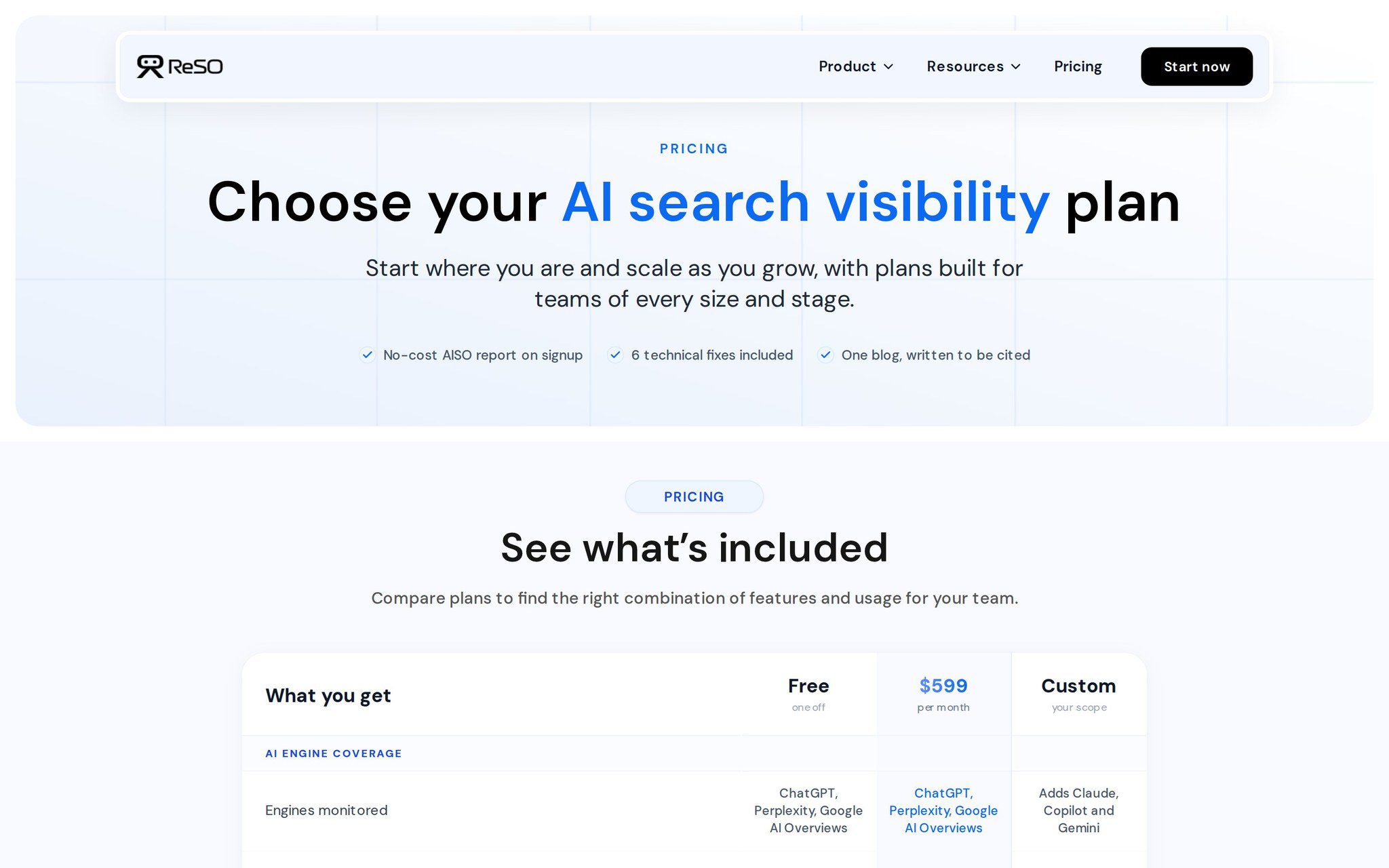
Freemium — free one-off option; paid plans are listed.
Things to Consider
-
Visibility and traffic are positioned as outcomes, but the available record does not establish a causal lift.
-
The named search surfaces are ChatGPT, Perplexity, and Google AI Overviews; broader marketing-stack connections are not identified.
-
The free offer is one-off, so recurring monitoring may require a paid plan.
-
Paid plans are listed without a published amount, complicating team-scale comparison.
Our Verdict
A sensible candidate for growth teams already measuring AI-search exposure and willing to treat the output as an experimental signal. Do not replace established acquisition reporting until visibility can be tied to qualified traffic and pipeline.
Try it: https://resollm.ai/pricing/
5. IrisGo for Solopreneurs

What It Does
A workflow builder for independent professionals who want recurring administrative work handled automatically. A solopreneur can use it for email triage and to-do tracking, creating reusable workflows instead of repeating the same personal operations daily.
Why It’s Trending
IrisGo launched on October 7, 2026, and its product page updated on October 10. It collected 505 votes and 131 comments—the strongest comment-to-vote signal in this group. That suggests discussion, not validated productivity gains [9].
Key Features
-
Creates reusable automations for recurring work
-
Helps sort and manage incoming email
-
Automates routine task follow-up
-
Hands repetitive work to a workflow
-
Runs on Windows 11 64-bit or Apple Silicon Macs
Best For
-
Businesses automating administration for one-person operations
-
Content creators reducing email and task-management overhead
What Makes It Different
It is aimed explicitly at solopreneurs rather than enterprise automation departments, with reusable workflows for the small operational chores that accumulate around one person. The closest rivals are general workflow-automation tools; the record supports audience focus, not a novel underlying technology [10].
Pricing
Paid — no published price.
Things to Consider
-
Email and to-do work are named use cases, but the connected services are not identified.
-
Reusable workflows can reduce repetition, but the record does not establish how difficult they are to build or maintain.
-
No stated workflow, task, or automation allowance.
-
The listed environments are Windows 11 64-bit and Apple Silicon Macs, which narrows deployment options.
-
No published price matters more for solo operators, who have little room for unused subscriptions.
Our Verdict
Belongs on a solopreneur’s shortlist when email and task repetition are the bottleneck and the supported computer environment fits. It is less compelling for teams needing shared administration, because the product’s positioning is deliberately individual.
Try it: https://irisgo.ai/solopreneur