The article discusses the increasing demand for AI hardware solutions in businesses, highlighting ten key technologies that integrate AI into enterprise operations. It explores the reasons for this shift, including privacy concerns, reduced latency, and the expectation of AI integration in workplace tools.
- Businesses are shifting from cloud-based AI to local hardware solutions.
- Privacy, latency, and the ubiquity of AI are driving the adoption of AI hardware.
- Ten effective AI devices are highlighted, including NVIDIA DGX Spark and Dell Pro Max.
In the past, AI was something that workers used through their web browser; now businesses are opting for hardware solutions instead. What this means is that machines, computers, wearables and every other type of tech will start to incorporate AI wherever employees are.
The urgency for these gadgets is clear proof that businesses have moved on to the next stage of the AI development process. Let’s take a look at the 10 most effective technologies in the enterprise category of AI.
1. NVIDIA DGX Spark
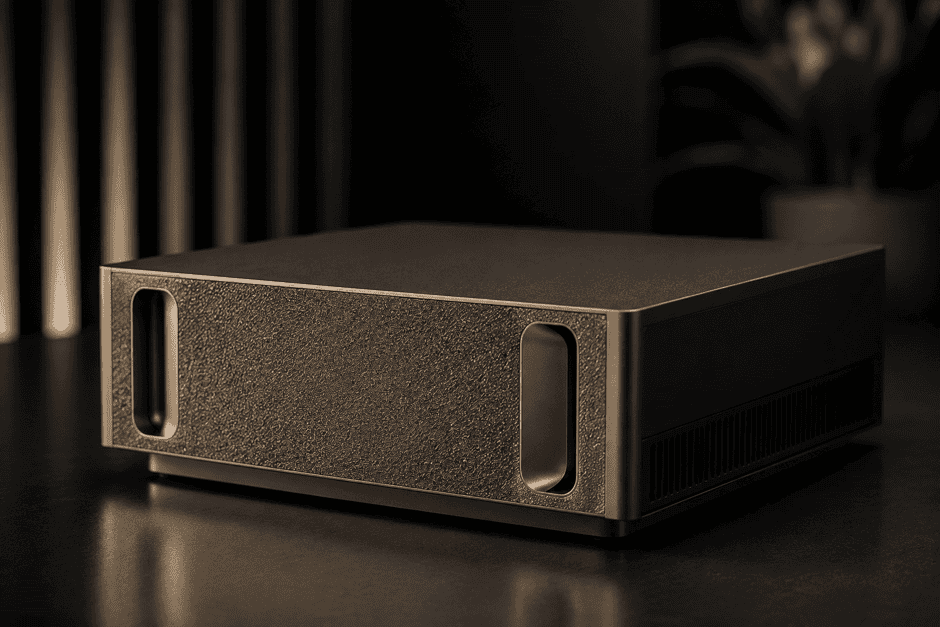
The NVIDIA DGX Spark is probably one of the most evident illustrations of the spatial shrinking of the enterprise AI device. Instead of asking companies to transfer all of their experiments to the cloud GPU cluster, DGX Spark provides them with powerful AI computation right within their workplace.
In its construction, the system is oriented at NVIDIA’s GB10 Grace Blackwell Superchip, equipped with 128GB memory. According to NVIDIA data, it can offer up to one petaflop of AI computing capabilities and is meant to work with complex models, autonomous agents, and data processing run locally.
It is clear that, for AI enterprise teams, using this system is an obvious advantage. Developers can build models, take advantage of agents and test inference without relying on remote infrastructure. It also works as a remote device that can run online through the network and gets closer to being an AI device, rather than an ordinary computer.
Link: https://www.nvidia.com/en-in/products/workstations/dgx-spark/
2. 2 Dell Pro Max with NVIDIA GB10
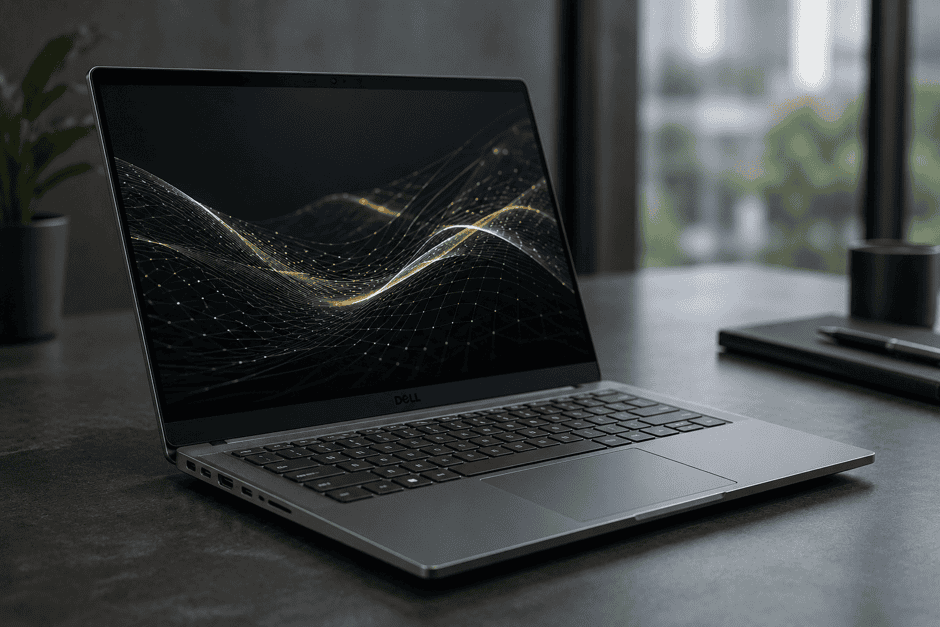
Dell is using the same local-AI principle within its Pro Max systems, which are being powered by NVIDIA Grace Black.
The compact GB10 system incorporates NVIDIA’s GB10 chip, which features 128 GB of unified memory and is capable of delivering approximately one petaflop of FP4 AI performance. Dell is advertising it as a device for AI development, local inference, edge applications, and tasks involving models with hundreds of billions of parameters.
This is important because AI development is moving away from being as dependent on centrality as it used to be. One data scientist or AI engineer may have the need to work with sensitive information related to customers in terms of particular proprietary code or internal models that organisations would not want to share with third-party services.
The powerful AI workstation enables employees to explore a third option to move data computation to the data instead of bringing data to the cloud.
Dell also expands its Pro Max line to cover laptops and desktops to have a more versatile corporate offering from typical work duties to heavy AI training and inference.
Link: https://bit.ly/4qbBAEC
3. HP EliteBook Ultra G1i
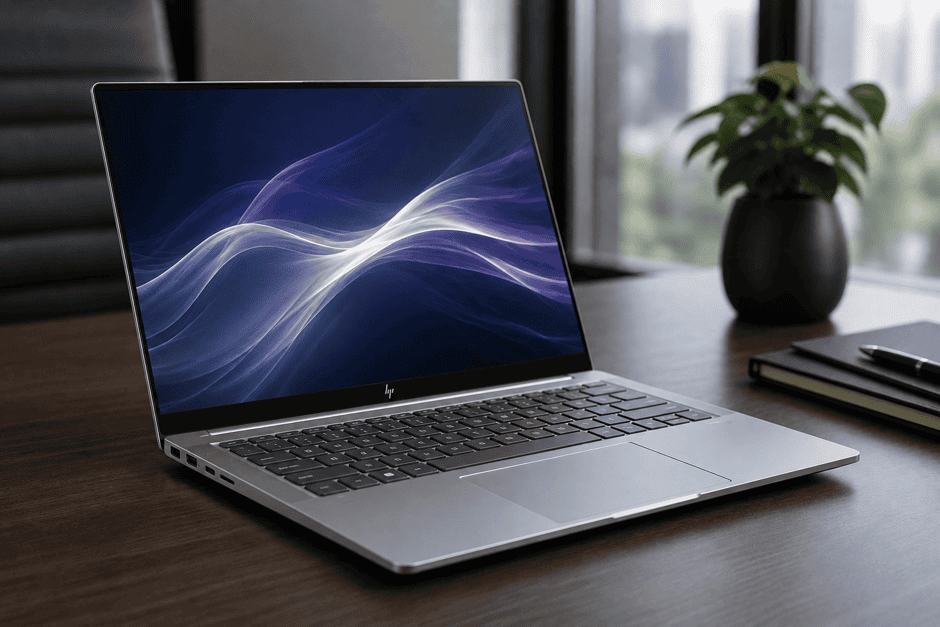
There’s no need for every business AI tool to resemble a pocket-sized data centre. To many office staff, an AI gadget means their work laptop.
The HP EliteBook Ultra G1i Next Gen AI PC shows how this works. The business laptop employs its Intel Core Ultra processors with an NPU delivering up to 48 TOPS, enabling Copilot+ PC usage. It also features business-oriented functionalities such as optional vPro, Wi-Fi 7, and AI-based video conferences.
What matters more is not the power of AI technologies, but that the technologies enable businesses to use AI in computing.
Rather than making their employees run a separate AI application, companies exploit the NPU for video effects, audio processing, and other local AI workloads.
HP further emphasises enterprise security and manageability, vital for the deployment of hundreds of AI PCs within one company.
Link: https://www.hp.com/in-en/laptops/business/elitebooks/ultra-ai-pc.html
4. Lenovo ThinkPad X13 Gen 7
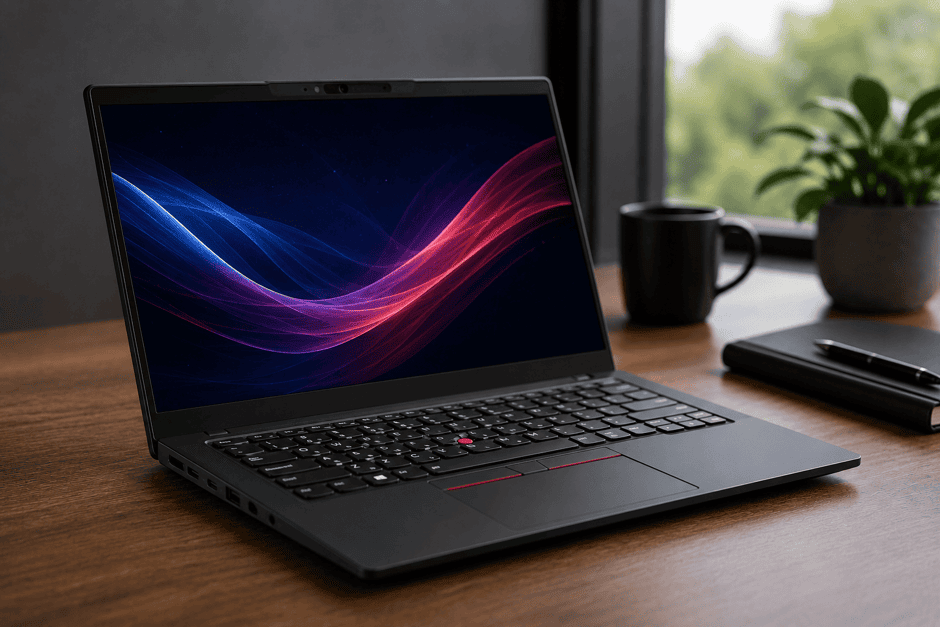
The 2026 ThinkPad lineup is being similarly developed by Lenovo. The models in this series comprise the ThinkPad X13 Gen 7 and other L-series computers that are aimed at the mass market of business customers while at the same time boasting the AI Copilot+ feature.
From the perspective of IT specialists, such laptops could be more desirable than any other cutting-edge research machines. There is no need for companies to promote employees with AI experience, as the devices they use will already have AI implemented into them.
This is especially relevant for such groups of users as finance individuals, marketers, software engineers, consultants, etc. The laptops are still regular devices, though AI is getting more and more sophisticated.
Therefore, we can expect AI laptops to evolve as corporate computing machines instead of being something exotic.
Link: https://bit.ly/3Umqfp6
5. Ray-Ban Meta Smart Glasses
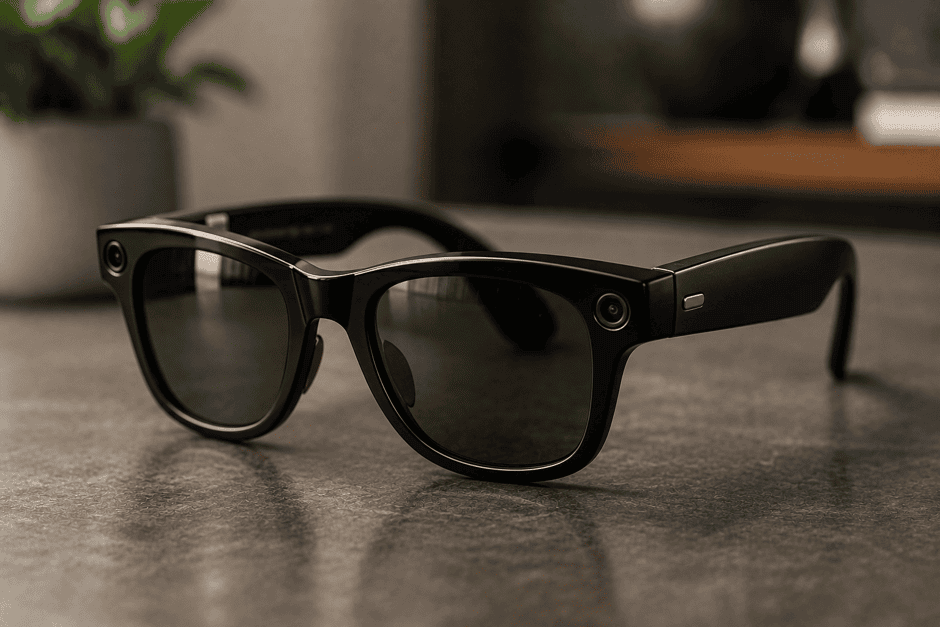
The introduction of smart glasses brings forth new advancements, especially the innovation of artificial intelligence.
The latest generation of Ray-Ban Meta glasses merges traditional lenses with the help of computer technologies and artificial intelligence. According to Meta, the smart glasses have already sold thousands of units and enable people to use AI without the need to contact it.
This development opens many possibilities for using them during business meetings and other occasions.
Sales managers can receive information without holding the phone in hand. Field employees can operate with voice commands while completing their tasks. Technicians can record and receive information without looking at their phones.
But it should also be mentioned that when using these devices in the business sphere, the problem of privacy arises.
The device includes cameras and microphones, which means there are problems connected with recording conversations with clients and coworkers. Public discussions about smart glasses showed the problems connected with their integration into businesses.
Link: https://bit.ly/4hjoeUi
6. RealWear Navigator 520
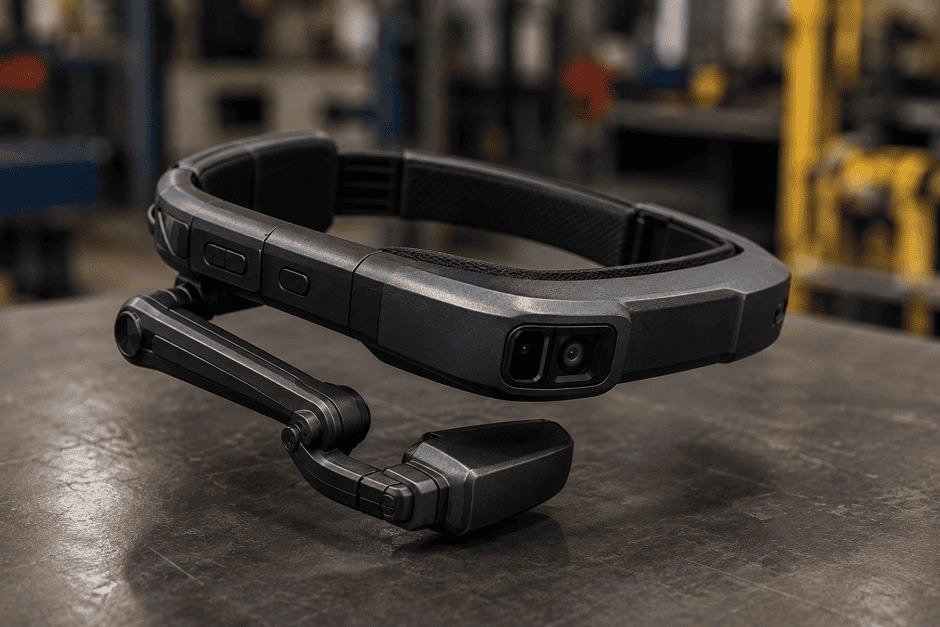
The RealWear Navigator 520 is specifically designed with a purpose in mind – making it useful for individuals in either their work environment or for technicians who need to carry out their tasks without limitations of any kind.
The device is made to work in an industrial setting, so it is outfitted for the tasks at hand. RealWear offers a thermal camera module that can make heat signatures available for the employees, which can enhance the work of a technician.
The RealWear device and its application of industrial AI are now becoming more tangible and a real experience for the working class.
Just think of a mechanic who repairs a machine without interruptions by keeping the information needed close by.
This is made possible using a RealWear device, which allows employees to stay away from manual work with the tablet and have their hands on the job.
RealWear serves the needs of large businesses, so its work is different from that of other kinds of gadgets.
Link: https://www.realwear.com/devices/navigator-520
7. Apple Vision Pro
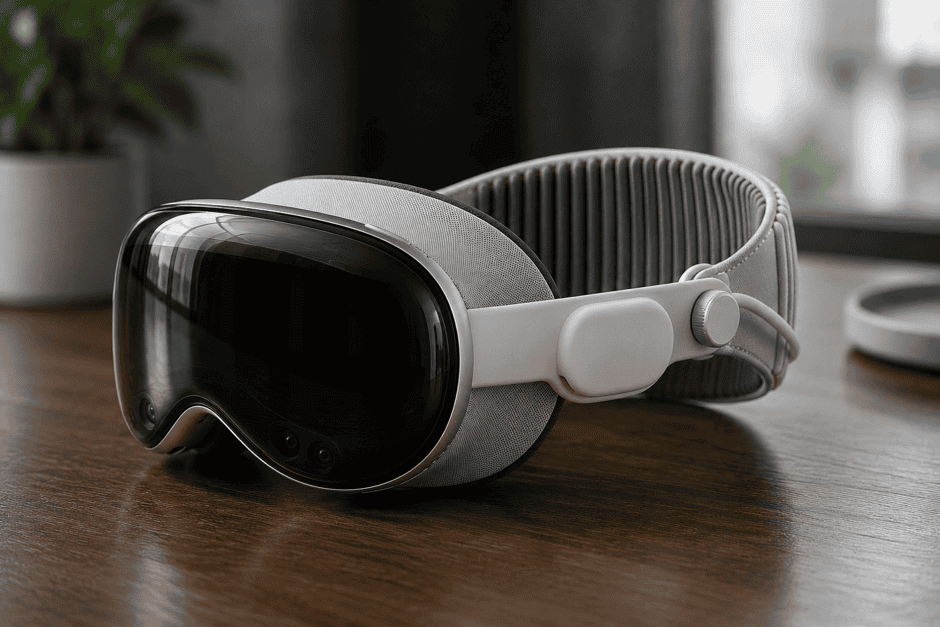
Apple Vision Pro is one of the most unique enterprise-oriented spatial computing gadgets.
Apple is marketing Vision Pro for use in product design, training, remote collaboration, guided work, and data visualisation. Companies can use 3D models to analyse their products, train staff in simulated environments, and provide digital instructions to staff so they can operate the equipment.
The enterprise use case is particularly compelling in industries where expensive prototyping and training environments are used.
Manufacturers can analyse digital twins. Engineers can examine complicated designs. Health care companies can analyse 3D body models. Training managers can create realistic simulations instead of relying solely on classes.
Apple has also built enterprise management capabilities into Vision Pro, such as zero-touch deployment, management of devices, and integration of enterprise identity.
The issue remains cost and ergonomics. It is not likely that Vision Pro will completely replace regular business laptops or monitors for most employees. Rather, it is best viewed as a specialised enterprise workstation for complex visual tasks.
Link: https://www.apple.com/apple-vision-pro/
8. Lenovo ThinkReality A3
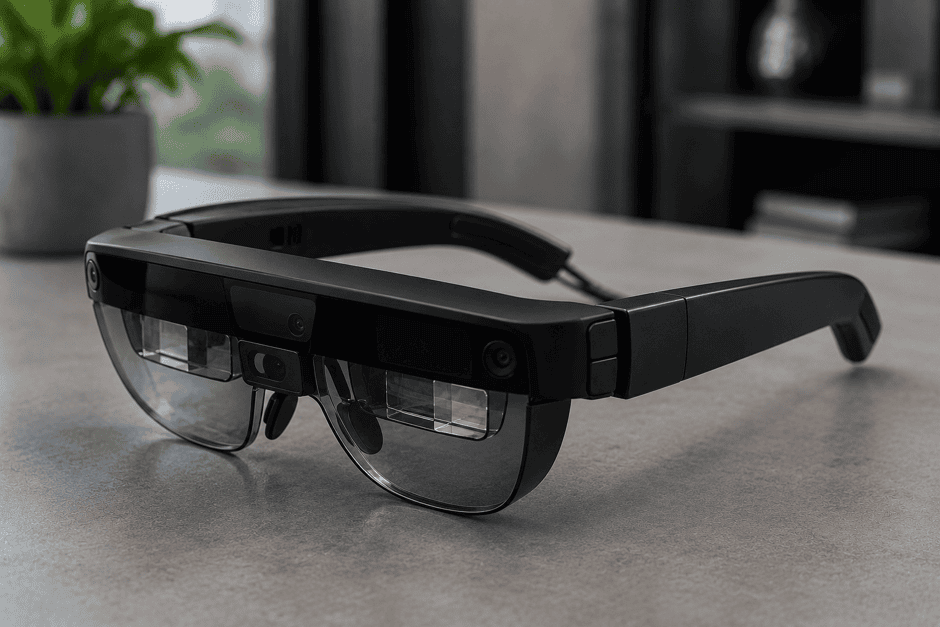
Lenovo has a unique viewpoint on enterprise augmented reality thanks to its ThinkReality A3 line.
The device is lightweight and is able to have a virtual display that informs employees how to perform tasks at work. Lenovo’s primary aim is to create these glasses which can be used as monitors in industry operations and teleassistance.
It is also fascinating how this tool can provide any needed number of virtual displays in wearable form and how it can solve a dilemma of mobile workers who would not need to carry lots of heavy computers with them anymore.
The AR glasses can also be used at the factory, where they display different schematics and instructions so that employees do not need to take their eyes off the equipment when using such glasses.
Lenovo’s ThinkReality A3 may not be the most revolutionary piece in this list, but its relevance stresses the fact that enterprise augmented reality has existed for quite a long time already and that AI is able to enhance these devices significantly.
The next step in AR technology development is likely to be the combination of visual comprehension, voice management and contextualised AI in existing AR
Link: https://bit.ly/45lxxfd
9. NVIDIA Jetson Thor
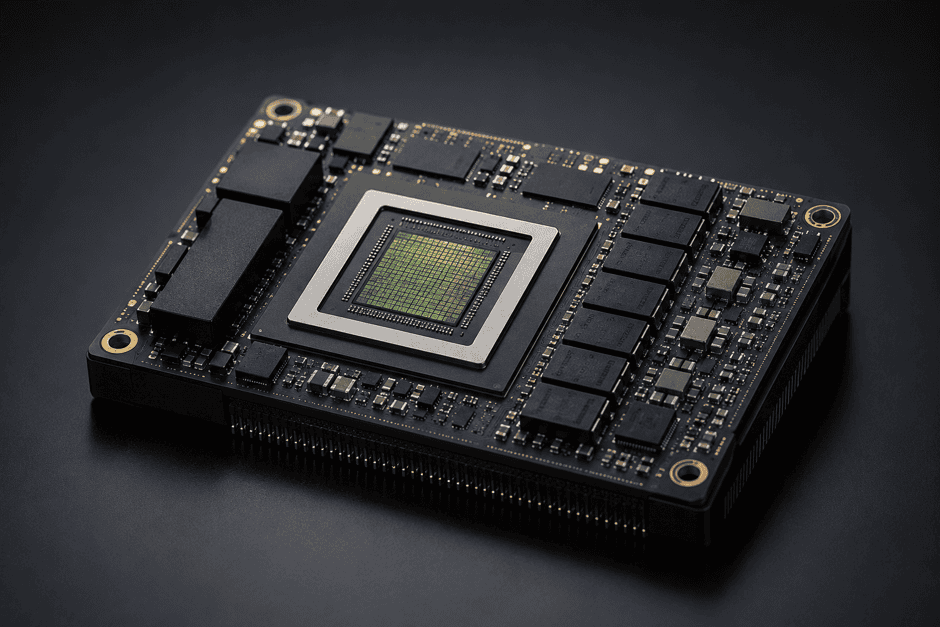
NVIDIA Jetson Thor signifies the next generation of enterprise artificial intelligence, which does not need human operators anymore.
The technology employs the Blackwell architecture, which comes with more than 2000 FP4 TFLOPS and 128 GB of RAM. Contrary to its competitors, the system is optimal for high-performance computing of advanced AI tasks at the edge.
This means that the platform can be used in any industry, including supply chains, manufacturing, and robotics, as well as many others that need instant response from AI in the real world.
The major benefit is in the reduction of latency because robots and autonomous devices are unable to wait for the cloud to process dozens of camera images or sensor readings.
This way, substantial AI computing power can be integrated directly into machinery, allowing companies to realise the possibilities of immediate perception, reasoning, and acting.
NVIDIA released other Thor modules in July 2026. These recent initiatives demonstrate the progress of NVIDIA technology towards the implementation of AI in robotics and edge computing. Some of the companies working with the platform are the following: Amazon Robotics, Boston Dynamics, FANUC, and others.
This category might be considered the most important on the list because it shifts enterprise AI
Link: https://www.nvidia.com/en-in/autonomous-machines/embedded-systems/jetson-thor/
10. 10 Snowball Edge from AWS
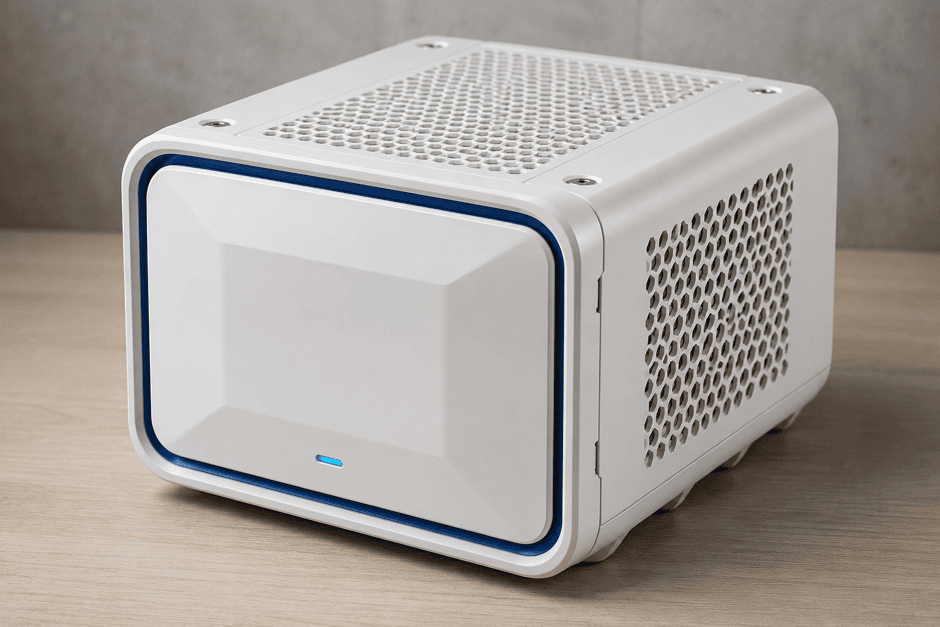
AWS Snowball Edge introduces a different aspect of enterprise artificial intelligence systems: it refers to the technology cultivated in conditions where both internet connectivity and data operations are challenging.
Snowball Edge equipment is a device combining both storage and computing functions; it allows data processing on the spot and transferring information to AWS. Such functionality is beneficial in situations of disconnection when sending a large amount of data to the cloud is not an option.
Nevertheless, it is important to mention the news of 2026 since AWS states that Snowball devices will not be available any longer on December 31, 2026.
This thus makes Snowball Edge less of a future purchase suggestion, as it serves as an example of the rapid development pace in the sphere of enterprise edge-computing technology.
At the same time, the main idea still remains very important nowadays – that is, businesses desperately need hardware capable of processing the information near the place it has been generated.
Link: https://aws.amazon.com/snowball/
Why Do Businesses Suddenly Need AI Hardware
The recent rise in interest in these tools is not just evidence of businesses investing in luxurious technology just for the sake of being trendy.
Three main reasons explain why businesses are now starting to adopt the physical infrastructure for AI.
The first one is privacy. Businesses that manage financial records, intellectual property, customer data or sensitive industrial information prefer not to allow all their workloads to be processed by the public cloud.
The second reason is delay. Machines, industrial systems and field employees cannot always afford to wait for a distant server to answer.
The third reason is that AI is becoming ubiquitous. Employees are increasingly expecting AI to be integrated into the software they use, and this influences the development of NPUs and AI-accelerating technology for laptops, workstations and mobile devices.
Research in the scope of enterprises’ implementation of AI technology shows that AI use goes way beyond simple searching, with employees resorting to AI for writing content, analysing information, making decisions, retrieving information, and troubleshooting.
This generates a need for specialised hardware that will be necessary to provide these processes with physical infrastructure.
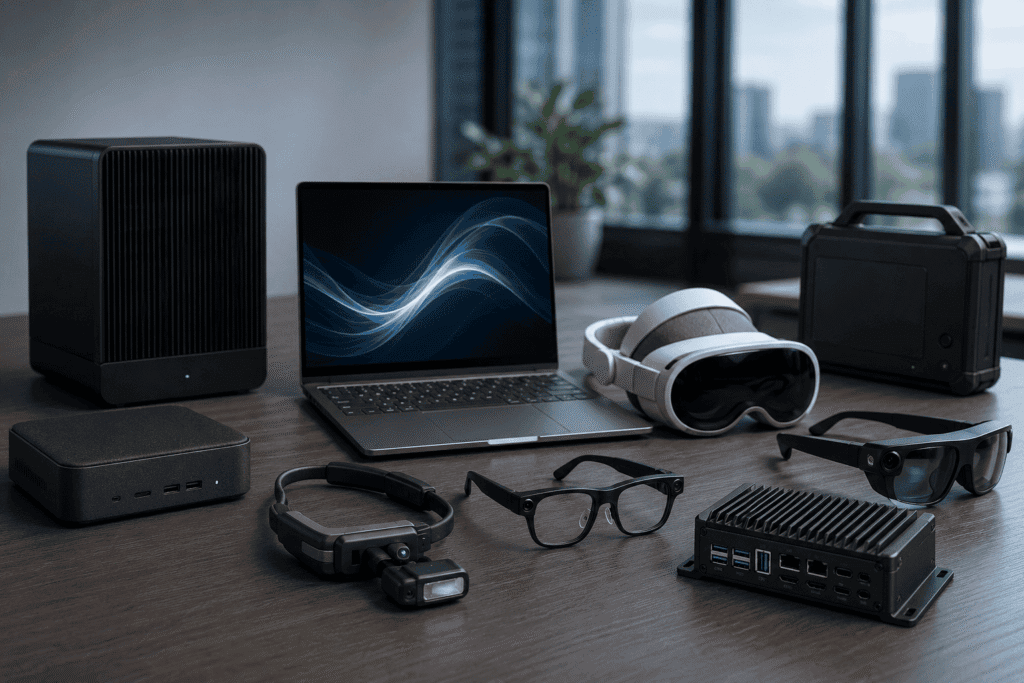
Employees could be equipped with AI-enabled laptops, while software developers may find value in working on advanced systems like DGX Spark or the Dell Pro Max workstation. Field technicians may be assisted by augmented reality devices like the RealWear glasses. Designers can use advanced technologies in their work, such as Vision Pro. Robotic instruments may depend on such technologies as Jetson Thor for effective functioning. Besides, sensitive workloads could be performed right at the edge instead of sending them to the cloud.
For this reason, the landscape of the enterprise AI equipment market is different in 2026. It is necessary to point out that these gadgets are not really substitutes for computers, cloud services, and smartphones. Instead, they create layers of intelligence around them.
As a result, it could be said that the real winners are companies that make layers easy to use, safe, and manageable on a large scale. Enterprise clients do not only require high productivity of AI; they want devices that the IT support team will be able to control and that workers will be able to use easily. In this context, we may conclude that the emerging trend for AI hardware is not about gadgets.
Frequently asked questions
What are some key technologies in enterprise AI hardware?
The article identifies ten significant technologies, including NVIDIA DGX Spark, Dell Pro Max, and Apple Vision Pro, which enable local AI computation and facilitate various enterprise tasks.
Why are businesses increasingly opting for AI hardware solutions?
Businesses are motivated by privacy concerns regarding sensitive data, the need for reduced latency in operations, and growing employee expectations for AI integration in their tools.
How does AI hardware benefit employees in various sectors?
AI hardware enhances productivity by enabling local computation, allowing employees to handle sensitive tasks without reliance on cloud services, thereby improving efficiency and security.
What challenges do AI tools like Ray-Ban Meta Smart Glasses face in the workplace?
The integration of smart glasses into businesses raises privacy concerns due to their camera and microphone features, which can lead to complications in recording conversations and maintaining confidentiality.
What does the future hold for enterprise AI hardware?
The landscape of enterprise AI hardware is expected to evolve with an emphasis on creating secure, manageable solutions that support the diverse needs of workers while enhancing productivity and efficiency.