
The enterprise AI landscape in October wasn't about another model winning a beauty contest. Five products stood out: a conversational builder, two governance layers, an agent-identity control, and a financial-services model platform. Their shared feature is unglamorous, but it's what matters.
They address who gets to act, where data goes, and how workflows are actually operated. The stack is fragmenting into distinct components. Procurement teams should take note.
1. Copilot Studio
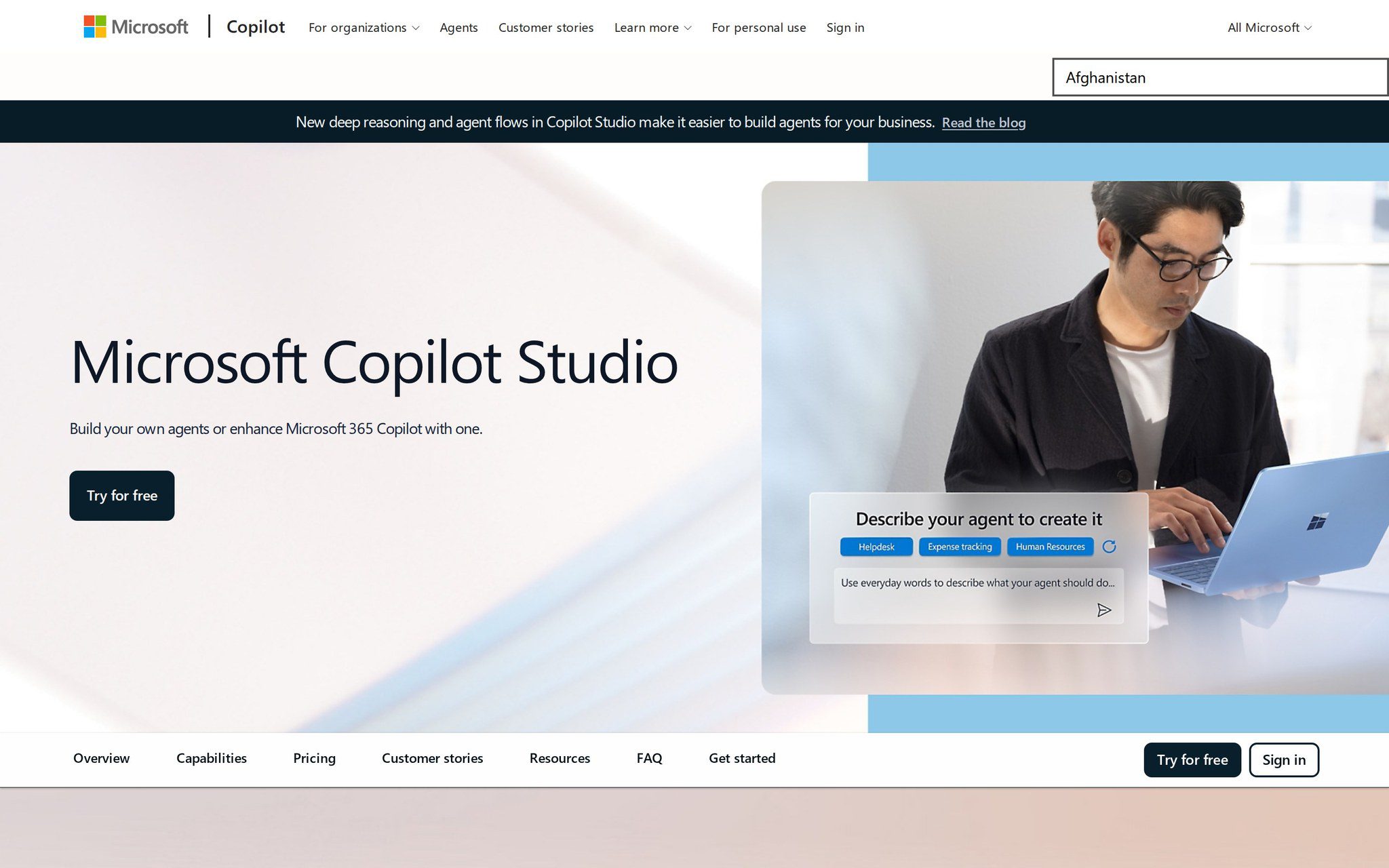
What It Does
Microsoft's Copilot Studio is a platform for building conversational AI agents. You can design, test, and publish them across different channels, then connect those agents to company data and systems.
Why It's Trending
Microsoft refreshed its product positioning in October 2026, and the platform appeared on the October 27 list [1]. The company emphasizes that its governance and lifecycle management now cover agents whether they're used inside or outside the company.
Key Capabilities
- Design conversational agents using natural language or a visual interface
- Test agents before they go live
- Publish agents across multiple channels
- Manage agents through their entire lifecycle
- Connect agents to organizational data and systems
Best For
- Business teams that want conversational agents without starting a full software project
- Solution developers building workflow-oriented agents
- IT departments managing agents on both internal and external channels
- CIOs assessing an application-builder layer connected to Microsoft 365
What Makes It Different
It combines low-code agent construction with direct connectivity to Microsoft 365 Copilot. You're evaluating an application-building environment, not just another API to a model. That template gets you a functioning agent; it doesn't get you fluent in machine learning.
Enterprise Use Cases
- Business teams creating internal conversational agents for employee workflows
- Solution developers building agents connected to company data
- IT teams publishing agents to internal channels and managing their lifecycle
- Customer-facing teams deploying agents on external channels
Deployment & Integration
It's a cloud/web app that integrates with Microsoft 365 Copilot, organizational data, and various user channels.
Things to Consider
- You'll need a standalone plan to publish agents to outside channels
- Connecting to organizational data and systems requires environment-specific work
- Lifecycle management spans internal and external channels, so your channel policy must be clear from the start
Our Verdict
A practical choice for CIOs and business teams that need governed conversational applications, provided the organization is aligned with Microsoft 365 and the cost of external-channel publication fits the budget.
Product page: https://www.microsoft.com/en/copilot/microsoft-copilot-studio
2. AI Passport
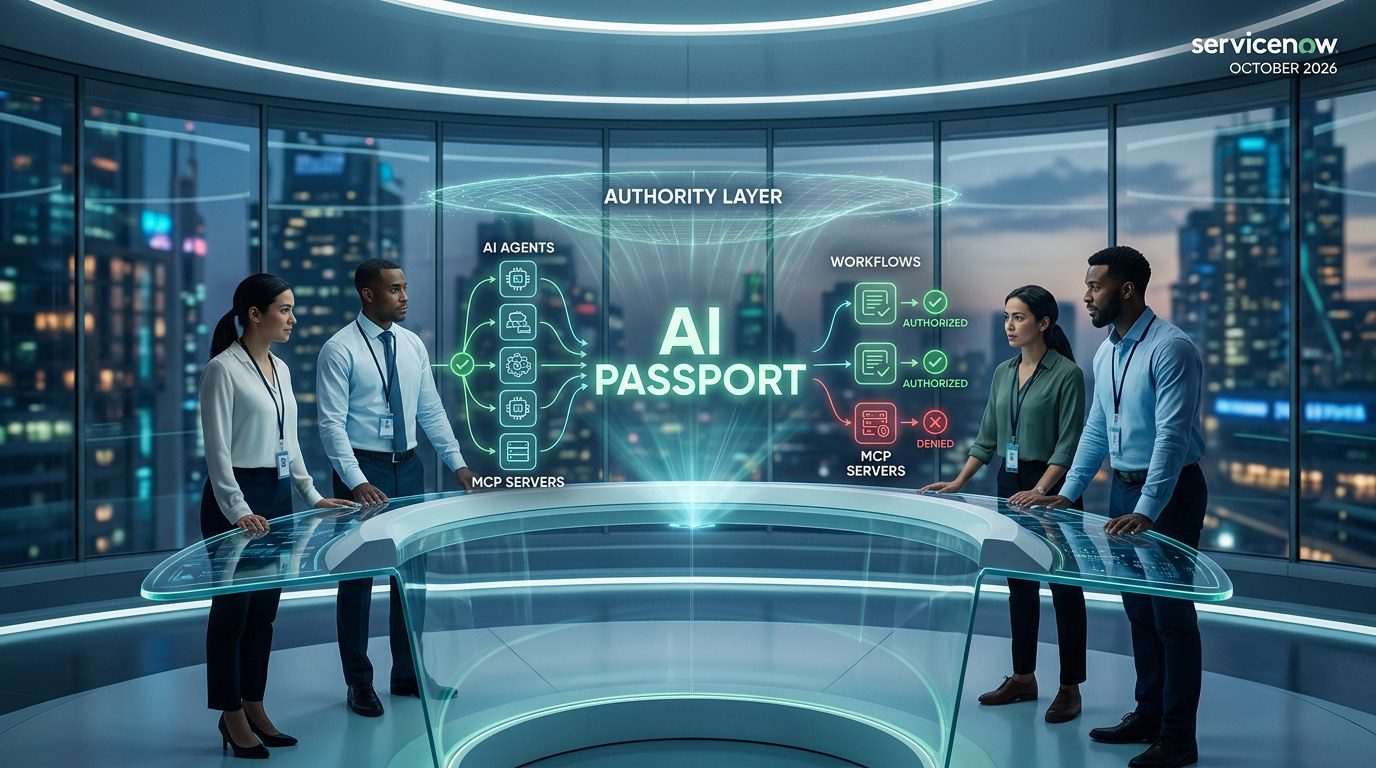
What It Does
ServiceNow's AI Passport is an authority layer for governing enterprise AI. It controls what AI agents and Model Context Protocol servers are allowed to do at each step of a multi-agent workflow.
Why It's Trending
ServiceNow released it on October 21, 2026 [2]. Enterprises are starting to see multi-agent authorization as a distinct problem. A static permission model for a dynamic workflow is like using a paper map during a flood.
Key Capabilities
- Authorize agents in real-time at each workflow point
- Govern AI agents during multi-agent operations
- Authorize Model Context Protocol servers
- Apply oversight across entire multi-agent workflows
- Enforce enterprise policy as an operating layer
Best For
- CIOs establishing runtime authority for multi-agent systems
- IT teams controlling agent and MCP-server permissions
- Business teams governing agents that act across connected workflows
What Makes It Different
AI Passport focuses on runtime authority. It's not a data platform or an agent-building workbench. Its value hinges entirely on where ServiceNow sits in the enterprise's control path.
Enterprise Use Cases
- IT teams authorizing an AI agent at specific stages of a workflow
- Security teams controlling what Model Context Protocol servers may do
- Governance teams applying runtime policy to enterprise AI agents
- Operations teams overseeing agent actions across connected systems
Deployment & Integration
It integrates with Model Context Protocol servers and existing multi-agent workflows.
Things to Consider
- Its usefulness depends on being placed across the relevant workflows
- Runtime authorization must match the permissions agents actually require
- The governance covers agents and MCP servers, not just the underlying model
Our Verdict
A strong fit for CIOs confronting multi-agent authorization, but the buying decision turns on coverage. Control that can't reach the relevant agents is just ceremonial governance.
3. AI Data Platform
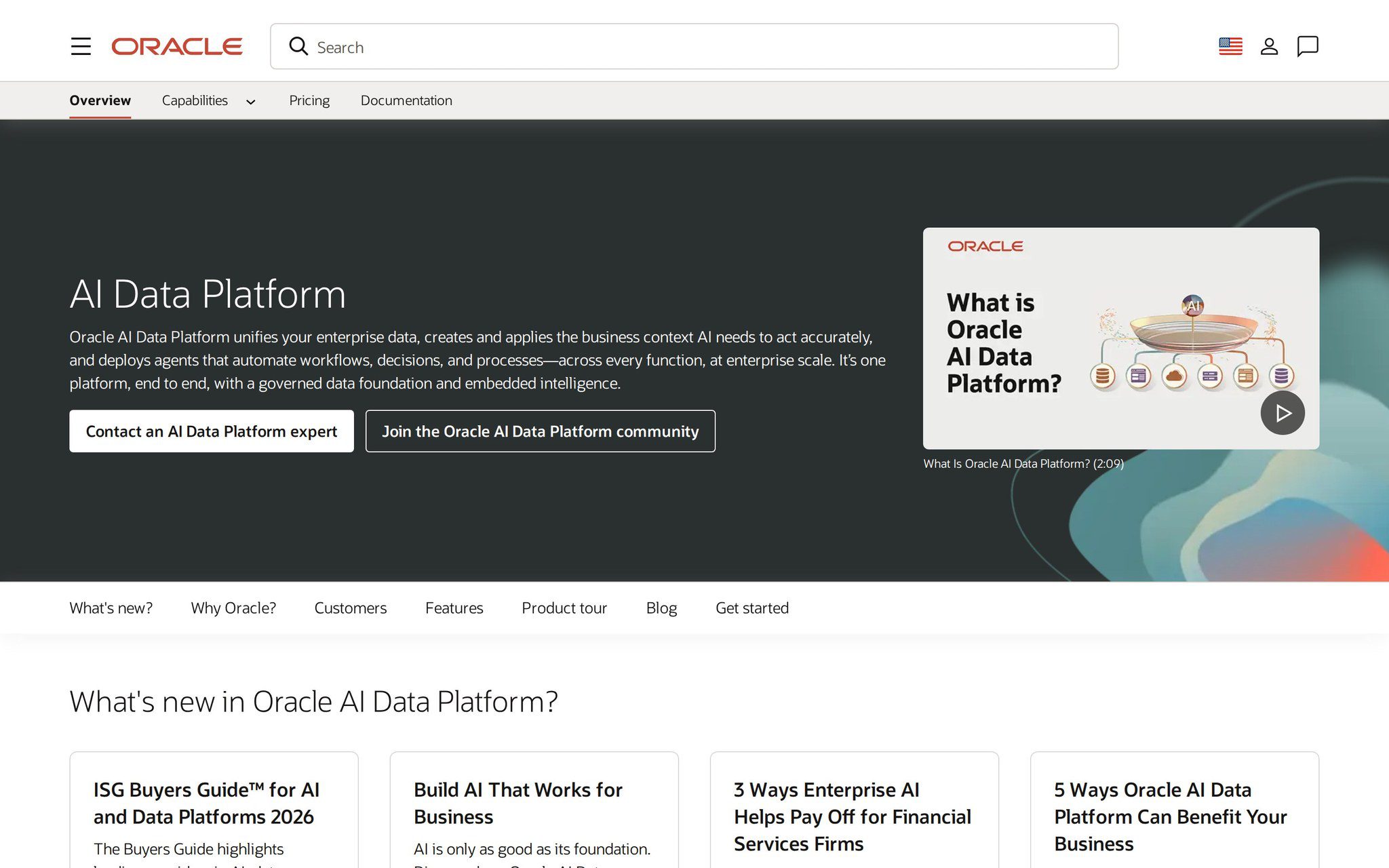
What It Does
Oracle's AI Data Platform pulls enterprise data, business context, analytics, models, and agents into a single managed environment. The idea is to deploy agents that automate workflows while keeping security, lineage, and access controls close to the data.
Why It's Trending
The product page was dated October 2026, with an introduction on October 29 [3]. It puts governance for scaling AI systems in front of buyers. Unlike a standalone layer, this approach makes the data environment itself the control surface.
Key Capabilities
- Unify enterprise data in one environment
- Add business context to make data usable for AI
- Deploy agents to automate workflows and decisions
- Govern metadata, lineage, and access through a catalog
- Control lifecycle with auditability, versioning, and security
Best For
- CIOs evaluating a governed data-and-agent foundation
- CTOs trying to align data, analytics, models, and agents
- IT teams managing access, lineage, and lifecycle controls
- Business teams automating decisions with contextual data
What Makes It Different
The proposition is co-location. You build and run everything in the same environment. That makes it broader than ServiceNow's offering, but it's also a much larger architectural commitment.
Enterprise Use Cases
- Data teams unifying enterprise data for AI workloads
- Analytics teams adding business context to models and agents
- Operations teams deploying agents to automate processes
- Governance teams auditing activity through lineage and versioning
Deployment & Integration
It's a cloud environment that hosts data, analytics, models, and agents together.
Things to Consider
- Consolidating all these elements is a substantial platform decision
- Catalog governance, lineage, and access control are central to the design
- The breadth of the environment may make adoption more costly than a narrow governance purchase
Our Verdict
A candidate for CTOs consolidating fragmented data-and-AI operations, provided the organization wants one managed environment rather than a narrowly scoped control.
Product page: https://www.oracle.com/ai-data-platform/
4. AI agent identity and control suite
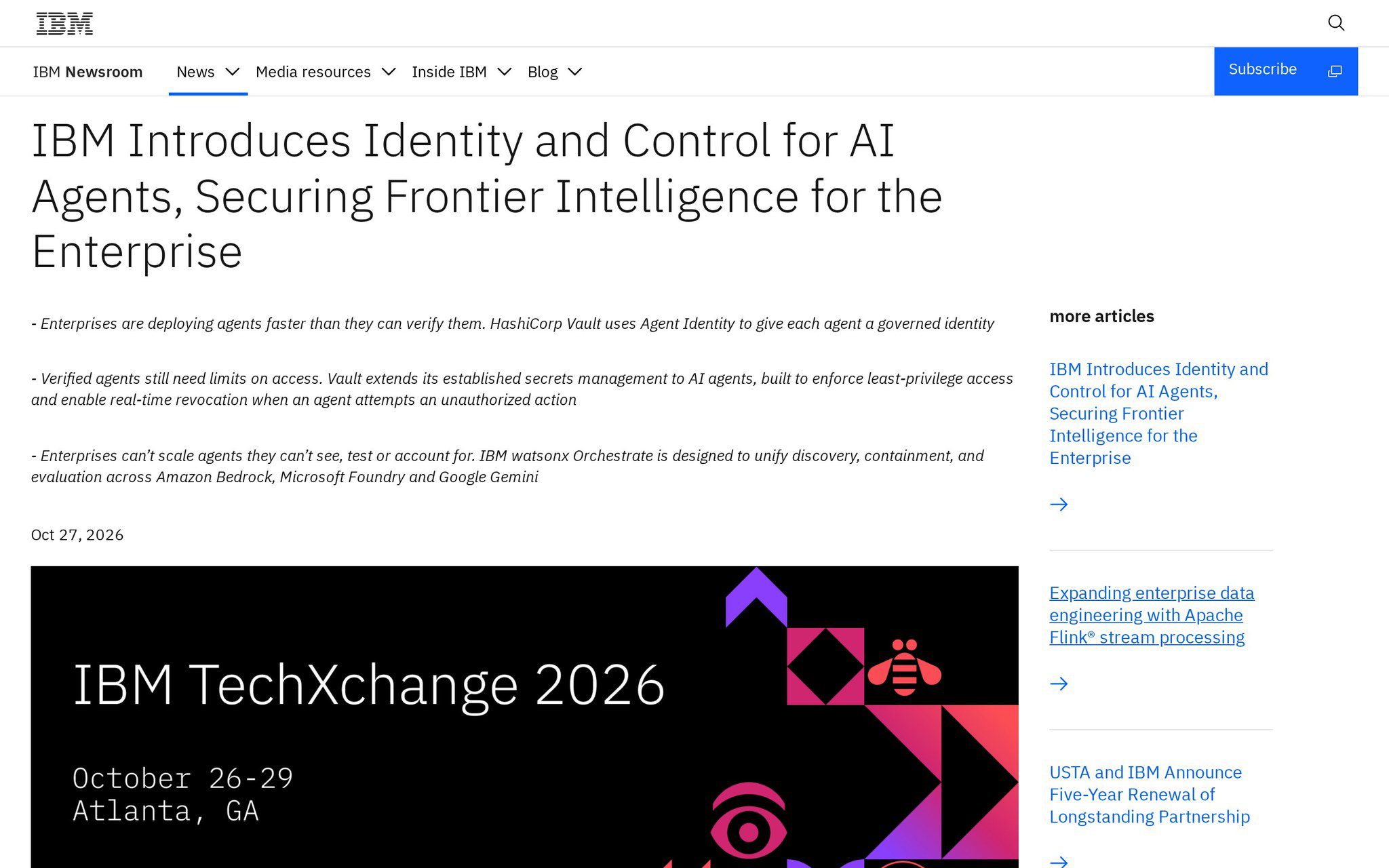
What It Does
IBM's suite is an enterprise security offering for AI agents. It treats the agent itself as an identity that needs credentials and authority, rather than treating every agent call as a simple API request.
Why It's Trending
IBM announced it on October 27, 2026, with integration for HashiCorp Vault [4]. The significance is architectural. Autonomous software needs governed identities, not just a developer's API key hidden in the code.
Key Capabilities
- Establish a verifiable identity for AI agents
- Control agent operations in enterprise environments
- Integrate agent security with HashiCorp Vault
- Apply governance oversight to AI-agent activity
- Secure agents acting on behalf of users
Best For
- CIOs setting an enterprise control model for autonomous agents
- IT teams integrating agent authority with existing credential infrastructure
- Security teams governing credentials for agents acting for users
- CTOs evaluating identity as a separate layer in the AI stack
What Makes It Different
IBM is treating agent identity as the primary security boundary and wiring it to HashiCorp Vault. It's narrower than a general data platform, but more operationally consequential when agents can act for employees.
Enterprise Use Cases
- Security teams integrating AI-agent credentials with HashiCorp Vault
- IT teams controlling agents operating on a user's behalf
- Governance teams applying identity-based oversight to AI agents
- CTOs establishing controls for enterprise agent operations
Deployment & Integration
It integrates with HashiCorp Vault and enterprise AI-agent operations.
Things to Consider
- Identity controls must cover the agents themselves, not just the humans who started them
- HashiCorp Vault integration makes your existing credential architecture part of the decision
- For meaningful oversight, agent actions must be associated with controlled identities
Our Verdict
A relevant option for security-led CIOs deploying agents with real permissions, provided HashiCorp Vault fits the identity architecture and the organization can define what an accountable agent identity looks like.
5. Claude

What It Does
This is Anthropic's enterprise AI platform tailored for financial-services workflows. The current solution page covers insurance and broader use cases, positioning Claude to support operational work inside a regulated industry.
Why It's Trending
Anthropic highlighted Claude on October 28, 2026, for operational-efficiency improvements in insurance [5]. A regulated buyer purchases auditability and operating fit. They aren't shopping for model theater.
Key Capabilities
- Support enterprise workflows in financial services
- Address insurance-related operational work
- Apply language-model capability to business processes
- Assist operational activity in financial-services settings
- Package the model for a regulated buyer context
Best For
- CIOs evaluating enterprise AI for financial-services operations
- Business teams applying AI to insurance workflows
- IT teams assessing a model platform for regulated-industry use
- Financial-services organizations exploring operational-efficiency workloads
What Makes It Different
Claude's differentiation here is domain positioning. Anthropic presents it through industry use cases, while the other entries sell application building, governance, data control, or agent identity. Correct me if that's wrong.
Enterprise Use Cases
- Insurance teams applying Claude to operational workflows
- Financial-services teams supporting enterprise business processes
- CIOs evaluating a model platform for regulated-industry operations
- Business teams assessing where language-model assistance can improve efficiency
Deployment & Integration
It integrates with financial-services and insurance enterprise workflows.
Things to Consider
- The financial-services positioning raises the need to validate controls against regulated workloads
- Governance capabilities aren't detailed in the current solution positioning
- Deployment and connections to existing systems must be evaluated before any rollout
Our Verdict
A plausible evaluation for financial-services CIOs, but the decision should rest on deployment, governance, and integration evidence for the specific workflow, not industry positioning alone.
Product page: https://www.anthropic.com/solutions/claude-for-financial-services
The buying pattern is clear, even in a list this small. Models are just one layer. Application builders, governance controls, data foundations, and agent identity arrive as separate budget lines.
More choice. More architecture to own. The cheapest platform is often the one that doesn't create a second control plane by accident.