Evaluating AI Business Operations Software: Comprehensive Analysis of Leading Automation Tools for Enterprise Efficiency
The adoption of AI-driven automation in business operations is not a luxury but a necessity. Companies seek operational tools that not only automate repetitive tasks but also enhance decision-making, workflow integration, and team collaboration. This article presents an analytical evaluation of top enterprise AI business operations software platforms based on their capabilities, unique value propositions, and market positioning, offering a clear landscape to facilitate informed decision-making for enterprise use.
1. Lindy: AI Executive Assistant Focused on Meeting Optimization
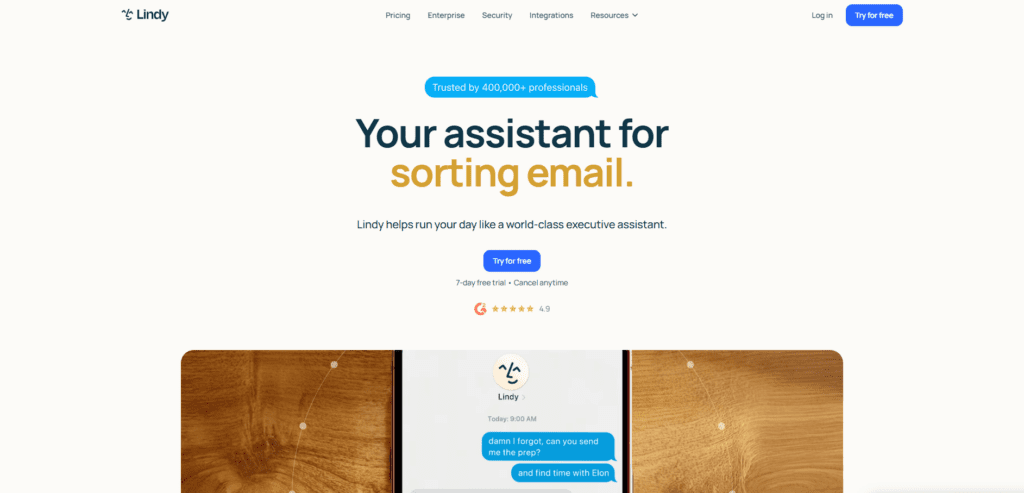
Lindy operates as a no-code AI executive assistant specifically designed to automate critical yet time-intensive business operations tasks such as managing meeting agendas, providing live question answering during meetings, and sending out summaries via Slack or email. This functionality directly addresses the frequent organizational challenge of meeting inefficiency.
Its key strength lies in its active AI agent capability that facilitates real-time assistance during meetings combined with integrations to Customer Relationship Management (CRM) systems and project management tools. By automating these tasks, Lindy reduces administrative overhead, ensures that teams remain aligned without manual follow-ups, and enhances meeting productivity through intelligent real-time support.
Market signals show Lindy gaining recognition in recent AI tool blog reviews emphasizing meeting workflow automation. Companies seeking to enhance internal collaboration and reduce meeting friction will find Lindy a robust option.
Lindy’s official resource can be viewed at: https://www.lindy.ai/
2. DataRobot: Automated Machine Learning for Business Intelligence
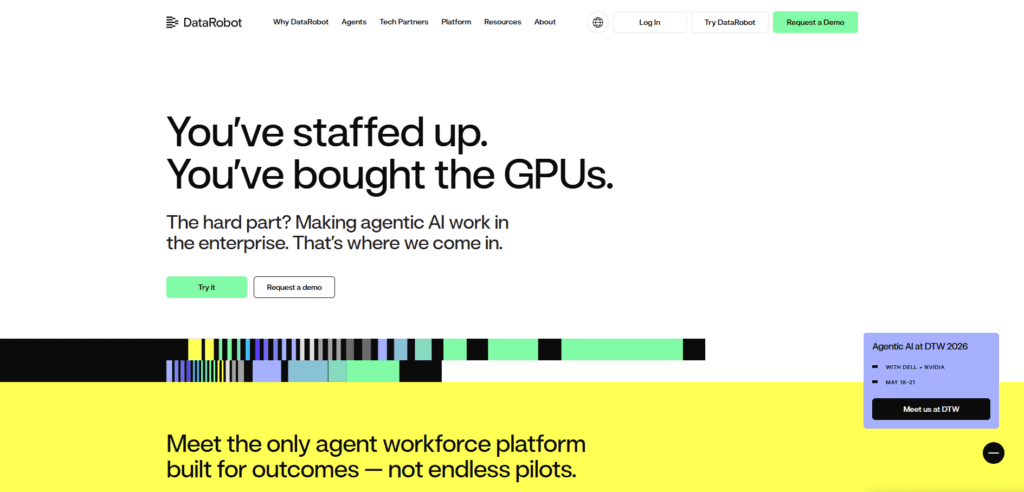
DataRobot elevates automation by incorporating automated machine learning workflows and real-time model deployment for business operational insights. Unlike many AI tools focused solely on task automation, DataRobot provides decision-support capabilities that integrate AI predictions into business processes, optimizing operational decision-making dynamically.
Its unique value is embedded in its ability to transcend simple task automation, enabling enterprises to adapt and respond with AI-driven insights affecting customer interaction, supply chain management, and resource optimization in real time.
DataRobot’s prominence is reflected in its frequent mentions within authoritative AI business automation articles and active discussions in professional AI communities, underscoring its credibility and adoption.
For enterprise AI predictive modeling solutions, explore: https://www.datarobot.com/
3. Make: Drag-and-Drop AI Workflow Automation Without Coding
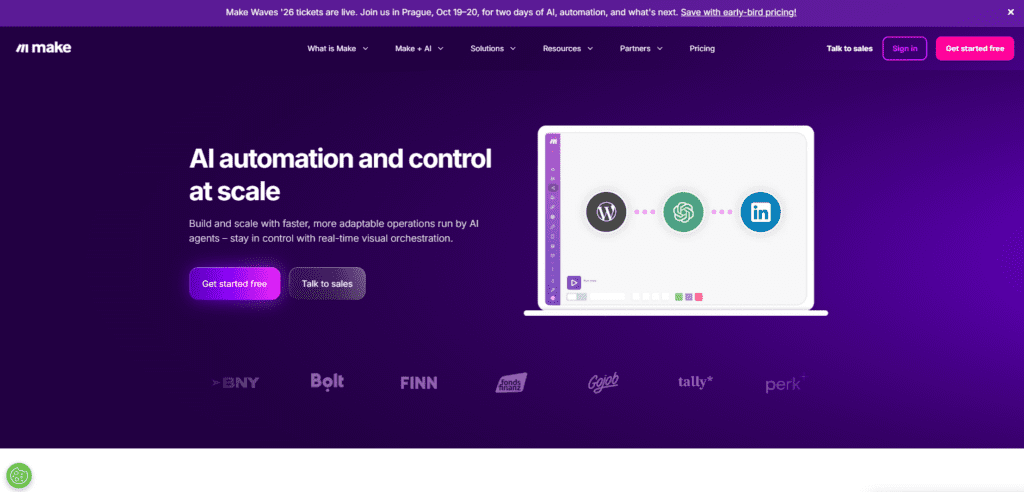
Make presents an automation platform that allows business users to build AI-powered workflows through an intuitive drag-and-drop interface. This no-code solution caters to organizations with minimal technical resources, facilitating integration and automation of complex workflows involving information gathering to prompt AI and managing AI-generated outputs effectively.
This flexibility empowers users to tailor their automation processes specific to their operational needs, without dependency on IT teams or developers. Make’s ability to enable customization without coding expertise is its core value proposition.
The platform has been recognized on channels emphasizing AI workflow integration and creative automation processes.
To assess its applicability in tailored AI-powered workflow automation: https://www.make.com/en/ai-automation
4. Slack AI Workflow Automation: Centralizing Business App Integrations
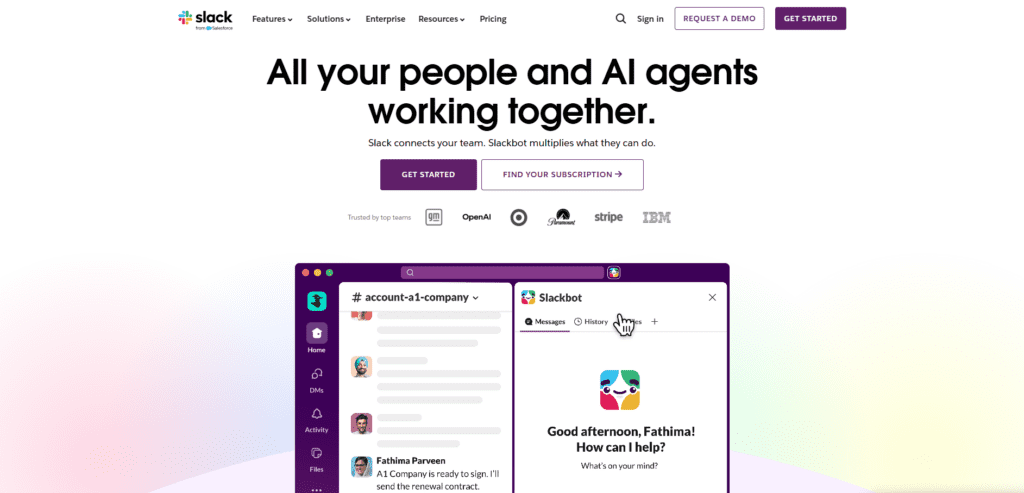
Slack enhances productivity by embedding AI workflow automation directly within its team collaboration environment. By connecting widely used applications such as Salesforce, Mailchimp, and HubSpot through AI-powered agents in Slack channels, it streamlines multitool workflows and integrates data across platforms without leaving the Slack interface.
This centralization of multiple app automations on a single platform increases operational efficiency and improves team communication by reducing context switching and manual coordination.
Widely discussed across Twitter and Reddit productivity communities, Slack’s AI automation appeals to enterprises requiring robust collaboration-driven automation.
More details at: https://slack.com/intl/en-in/
5. Rippling AI: AI-Driven Automation in HR and Workforce Management
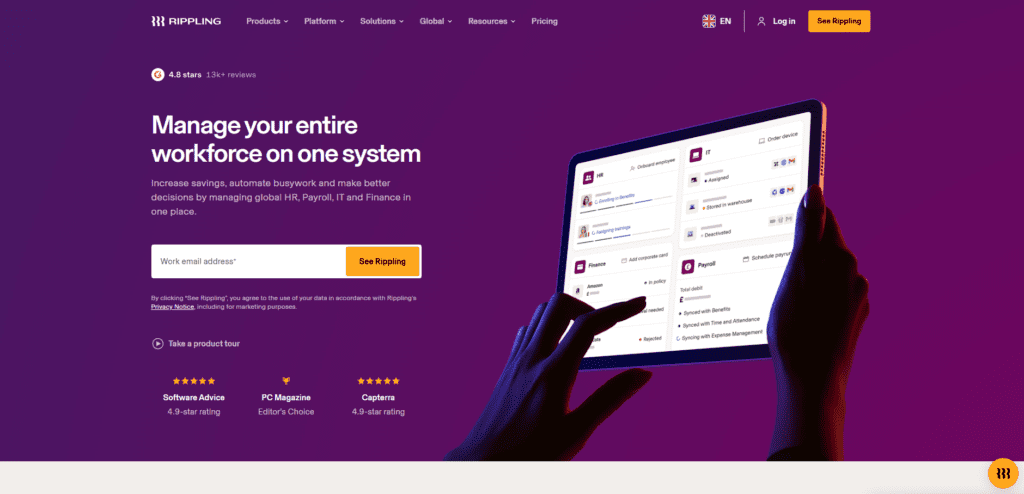
Rippling AI uniquely combines AI-powered automation with HR functions, targeting automation of manual processes including data entry, customer service, and inventory management within HR departments. By embedding AI for workforce management automation, companies can streamline complex HR workflows, reduce administrative workload, and improve data accuracy.
Its integration of broad operational AI automation into HR systems offers versatility suitable for companies of varying sizes. Rippling AI’s traction is notable in AI automation use case literature and among HR technology professionals.
This solution is paramount for organizations seeking to modernize HR operations through AI, details provided here: https://www.rippling.com/en-GB
6. Zapier AI Automation: Extensive Multi-App Workflow Customization
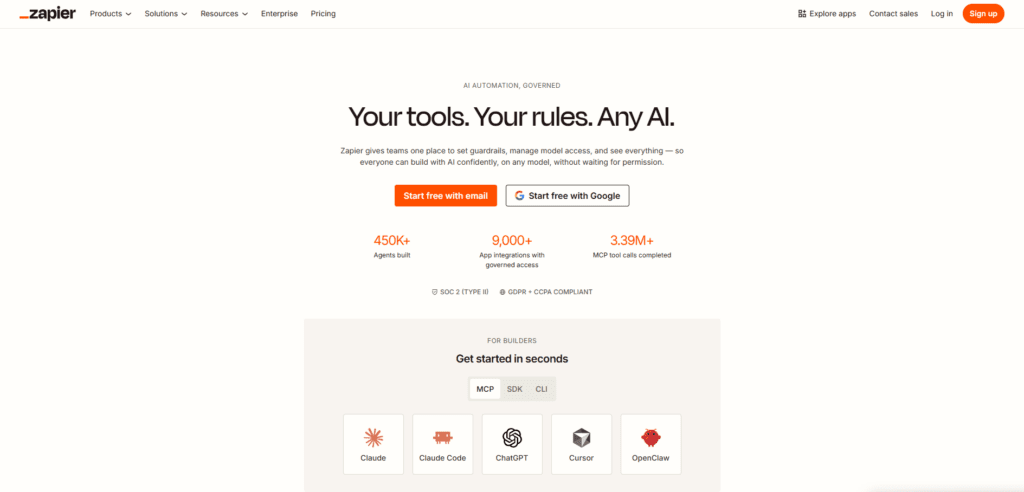
Zapier, well-known for its extensive app integrations, has augmented its automation capabilities with AI enhancements that enable building complex, multi-step workflows that span across various business applications.
The platform’s strength lies in its ability to customize workflows tailored to diverse business needs, streamlining repetitive tasks, and elevating operational efficiency across departments.
Zapier’s popularity is bolstered by active engagement in Reddit automation communities and favorable reviews from content creators on platforms like YouTube.
For comprehensive workflow automation, visit: https://zapier.com
7. Spoke AI: Automated Internal Business Inquiry Management
Spoke AI delivers a focused solution for automating internal employee inquiries, functioning as an AI-powered support desk that instantly answers frequently asked questions and manages internal communications with a learning knowledge base.
Its AI adapts through continuous interactions, improving the precision and relevance of responses, thereby reducing human dependency in employee support functions.
The platform is gaining momentum in enterprise productivity discussions and is recommended for organizations aiming to streamline internal communication and support services.
More information available at: https://www.spoke.ai/blog/spoke-update
8. AutoTask AI: Specializing in Routine Operations Automation
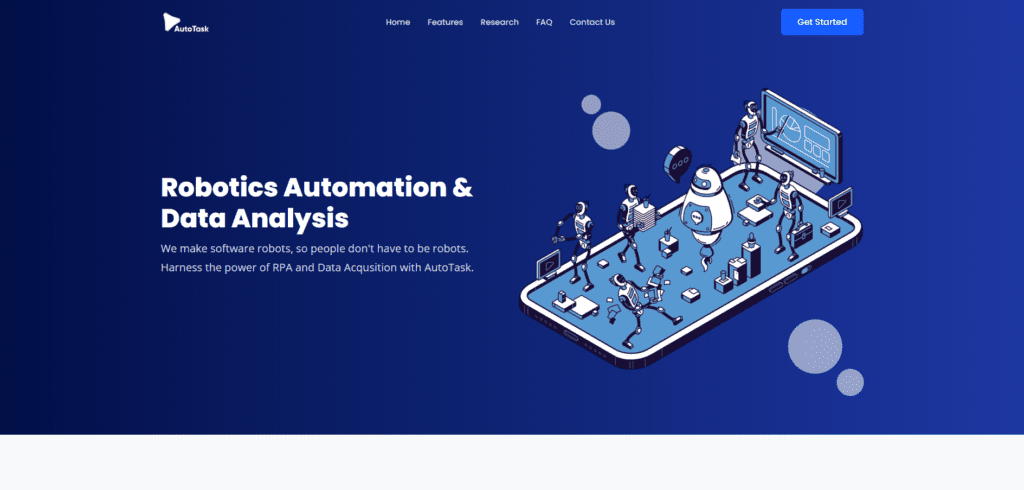
AutoTask AI concentrates on automating routine operational tasks such as scheduling, follow-ups, and reporting. Its AI-driven process automation helps businesses reduce operational overhead and deliver consistent workflows by automating repetitive tasks.
This specialized focus enables organizations to enhance operational consistency and free personnel from manual, time-consuming duties.
Its visibility is increasing in startup ecosystems and operational AI use cases, making it a candidate for organizations aiming to reduce task redundancy.
For further exploration: https://autotask.ai
9. Ximble AI: AI-Driven Employee Scheduling and Time Tracking
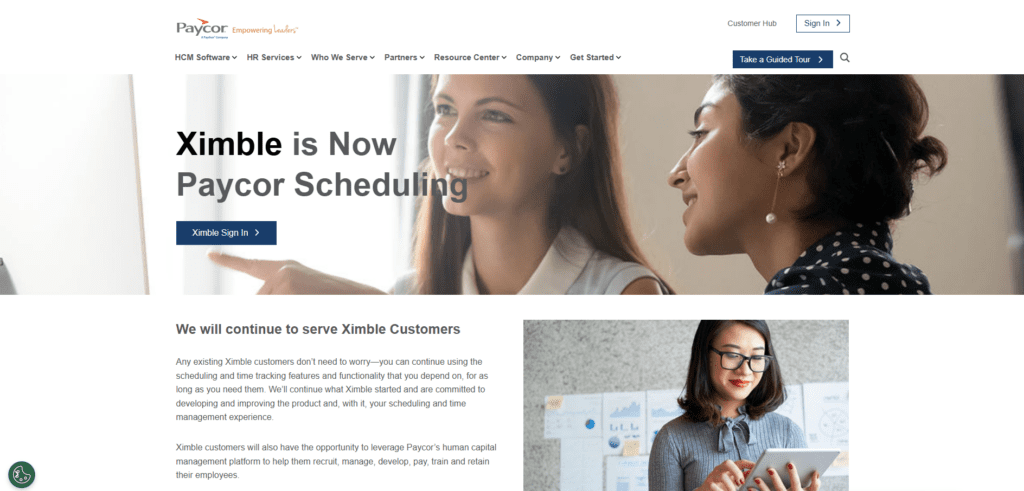
Ximble AI targets the often-complex domain of labor management by leveraging AI for employee scheduling and time tracking. The platform’s use of AI-driven analytics provides actionable insights to optimize workforce deployment while reducing administrative burden on HR teams.
Integration of predictive analytics offers improvements in operational decisions related to labor costs and availability, crucial for businesses with fluctuating workforce demands.
Its recent recognition in HR automation technology discussions attests to its growing relevance.
Detailed overview at: https://www.ximble.com
10. Kapture AI: Automation for Customer Service Operations
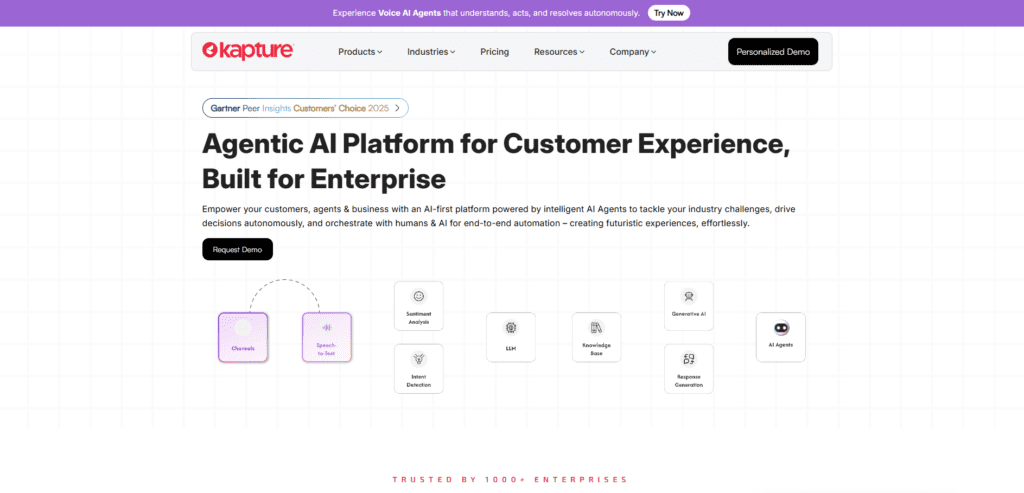
Kapture AI automates a range of customer service workflows through AI-powered management of client interactions, ticketing systems, and feedback collection processes. By embedding AI into CRM features, Kapture AI enhances support team efficiency and streamlines repetitive service tasks.
Its tailored approach to customer service automation suits organizations focused on improving client satisfaction and operational throughput in support functions.
Discussions about Kapture AI frequently appear in customer service automation forums and technology review blogs.
Explore its capabilities at: https://www.kapture.cx/
Conclusion: Strategic Selection Based on Operational Needs
This landscape review demonstrates that AI business operations software offerings vary significantly in scope and specialization. Enterprises must align their choice of AI automation tools with specific operational needs—whether focused on meeting management automation, HR, customer service, or complex workflow integrations.
- For organizations prioritizing meeting efficiency and real-time assistance, Lindy stands out.
- Companies seeking advanced AI-driven decision intelligence in analytics should consider DataRobot.
- Non-technical teams wanting customizable AI workflows without coding will find Make and Zapier suitable.
- Enterprises requiring centralized app integrations and improved collaboration will benefit from Slack AI.
- HR departments looking to modernize routine processes may prefer Rippling AI or Ximble AI.
- Businesses emphasizing customer service automation should evaluate Kapture AI.
An awareness of each platform’s unique value propositions and market adoption trends is essential for a strategic and effective digital transformation in business operations. Direct engagement with vendors through their official websites—linked above—will provide deeper insights and facilitate tailored solution implementation for maximal operational impact.
Organizations committed to leveraging AI in operations gain competitive advantage by selecting platforms aligned with their operational workflows, readiness for AI adoption, and scalability requirements. This thorough and structured evaluation provides a foundation for such informed decision processes.