
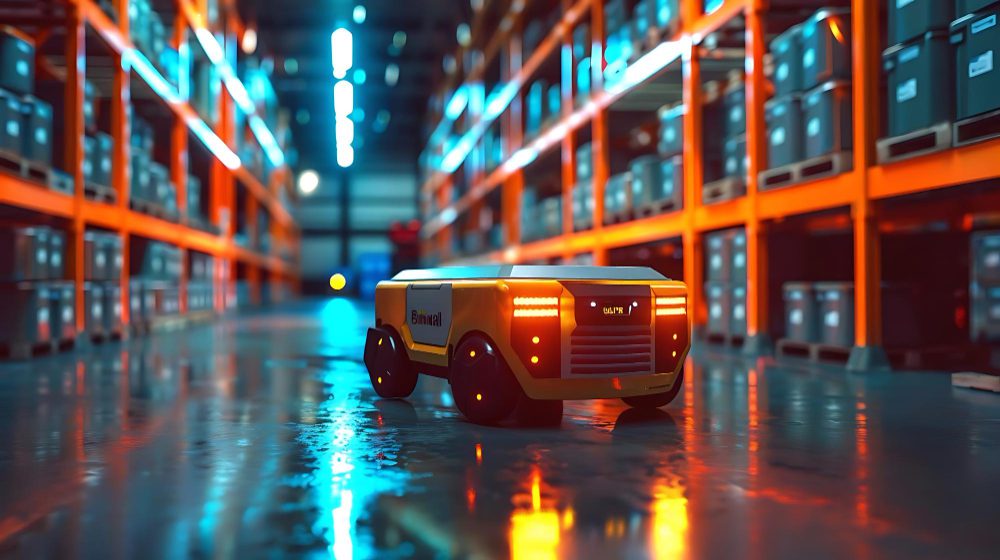
AI in Transportation & Logistics: Autonomous Vehicles, Route Optimization, and Supply Chain Intelligence
Artificial Intelligence is fundamentally transforming the transportation and logistics industry. Autonomous vehicles, AI-optimized routing algorithms, and intelligent supply chain management systems are driving unprecedented levels of operational efficiency and reliability. In an environment defined by tight delivery windows, complex networks, and rising customer expectations, AI’s role has shifted from experimental technology to essential infrastructure. Businesses are rapidly advancing scalable real-time AI systems for logistics that operate in real time, orchestrating fleets, routes, and supply chains with precision. The pressure to deploy robust, AI-driven transportation solutions capable of handling dynamic conditions and vast data streams is higher than ever, underscoring the urgent need for full-scale adoption beyond pilots and proofs-of-concept.
Context: Why AI in Transportation & Logistics Matters Now
The transportation and logistics sector is facing increasingly complex challenges. Supply chains have grown more fragmented and global. Customers now expect faster, more reliable deliveries, often on-demand. Environmental regulations and sustainability goals impose new constraints on vehicle utilization and routing efficiency. These pressures demand intelligent, adaptive AI systems for logistics optimization capable of optimizing resource use while maintaining service levels.
Technology progress has created the enabling environment for AI-driven transformation. Developments in deep reinforcement learning for autonomous vehicles enable complex decision-making under uncertainty. Agentic AI systems for multi-agent coordination can autonomously coordinate multiple agents and adapt strategies in real time. Improvements in communication networks—ranging from 5G-enabled AI connectivity to satellite constellations—facilitate continuous connectivity and data exchange critical for autonomous operations. As a result, companies are investing heavily to move beyond pilot projects toward deploying AI-powered smart fleet management solutions at scale.
There are significant challenges. Data quality issues in AI logistics systems remain a critical concern given the fragmented sources and variable completeness typical of logistics operations. Reliable communication networks are essential for safe autonomous vehicle coordination and control but remain susceptible to outages and security risks. Ethical and regulatory questions about AI deployment in public spaces and driver displacement also demand careful navigation. Addressing these issues while capturing AI’s benefits requires substantial cross-disciplinary effort.
Deep Dive
Section 1: Autonomous Vehicles & Communication Optimization
Autonomous vehicles represent one of the most visible and impactful AI applications in transportation. This includes self-driving trucks, unmanned aerial vehicles (UAVs or drones), and emerging urban air mobility (UAM) solutions such as air taxis. Deep reinforcement learning techniques are increasingly employed to plan trajectories and coordinate vehicle movements dynamically, enabling fleets to navigate complex urban and highway environments safely.
Autonomous vehicle operations depend heavily on robust communication infrastructure. 5G-enabled AI communication networks support low-latency data exchange for real-time control and monitoring, while satellite-based AI communication systems fill coverage gaps in remote or dense urban areas. Failures or interruptions can compromise safety or lead to costly delays, making network reliability a paramount design consideration.
Real-world challenges remain significant. Coordinating multiple autonomous vehicles—ground and air—requires sophisticated multi-agent AI logistics systems capable of negotiating routes, avoiding collisions, and adapting to changing traffic conditions. Urban air mobility faces scalability challenges including airspace management and noise regulation. Ethical concerns such as liability in autonomous accidents and workforce displacement add layers of complexity to deployment decisions.
Leading companies in the field have integrated AI-driven trajectory planning powered by deep reinforcement learning to optimize routes, reduce delivery times, and mitigate risks. Autonomous trucks equipped with such AI systems demonstrate measurable improvements in delivery speeds and reductions in accidents caused by human error. According to LinkedIn Pulse, autonomous vehicles reduce human error and enhance delivery speeds—validating AI’s critical role in advancing logistics efficiency.
Section 2: AI-Driven Route Optimization & Supply Chain Intelligence
Beyond autonomous vehicles, AI enables transformative improvements in AI-powered route optimization software and advanced supply chain intelligence platforms. Last-mile delivery, a critical and costly segment, benefits significantly from AI systems that optimize routes based on real-time factors such as traffic congestion, weather conditions, and delivery time windows.
Agentic AI logistics models can autonomously adjust shipping decisions considering dynamic environmental factors, enhancing reliability and resilience. By integrating diverse data streams, including traffic sensors, weather forecasts, and package statuses, AI systems support dynamic rerouting and load balancing that minimizes delays and reduces operational costs.
The benefits are quantifiable. AI-driven route optimization reduces logistics costs by approximately 15% while improving inventory management by up to 35%, according to McKinsey data cited by Forbes. Companies experience faster delivery times, improved customer satisfaction, and a stronger competitive position through analytics-driven intelligent supply chain management.
These systems also drive sustainability gains by minimizing empty miles and reducing fuel consumption—directly lowering emissions. Dynamic, AI-powered supply chain decision-making ultimately enables supply chains to be more responsive, cost-effective, and environmentally aligned.
Section 3: Emerging AI Tool Ecosystem in Logistics
The AI tool ecosystem supporting logistics operations is rapidly expanding. Commercial solutions now include AI workflow automation platforms that streamline fulfillment processes, intelligent dispatch AI agents that manage communication, and sophisticated project management tools designed for complex logistics networks.
Integration of real-time environmental data—traffic updates, weather changes, vehicle telemetry—feeds into AI systems enabling dynamic, context-aware decision-making. Examples include AI-powered package counting with near-perfect accuracy, predictive maintenance systems for logistics fleets that detect vehicle component failures before breakdowns occur, and intelligent vehicle monitoring that optimizes fleet utilization.
Automation spans multiple fulfillment stages and supply chain operations. From warehouse sorting to last-mile delivery coordination, AI-driven logistics automation solutions reduce dependence on manual scanning and human intervention. Reports from TMA Solutions show that top AI logistics automation tools significantly improve counting accuracy and speed up sorting processes, driving operational excellence.
This ecosystem maturity allows companies to orchestrate end-to-end AI logistics workflow automation that enhance throughput, reduce errors, and adapt rapidly to changing demands—crucial capabilities in today’s volatile logistics environment.
Section 4: Workforce Demand for AI Expertise in Logistics
The accelerating deployment of AI in transportation and logistics is driving a parallel surge in demand for AI and ML engineers specialized in logistics, agentic AI developers, and AI architects with domain-specific supply chain expertise. Building and maintaining AI-enabled systems requires professionals adept at blending technical AI expertise with deep understanding of supply chain dynamics.
Human-AI collaboration is critical. While routine tasks increasingly become automated, humans are focused on higher-value decision-making such as AI oversight, exception handling, and strategic planning. Companies are investing heavily in training programs and talent acquisition strategies aimed at developing AI business operating systems that integrate seamlessly with logistics functions.
FreightWaves reports that combining AI capabilities with human expertise can cut processing times by as much as 50%, while simultaneously improving client satisfaction and operational accuracy. This synergy underscores that technology adoption alone is insufficient without the parallel development of workforce skills tailored to AI-augmented logistics environments.
Implications
The practical impacts of AI in transportation and logistics are already profound. Operations become more efficient, costs shrink, and delivery performance improves substantially. Autonomous vehicle deployments reduce human error-related incidents and can accelerate delivery cycles. AI-driven route optimization cuts fuel usage and enables smarter inventory management. Together, these advances translate into stronger financial performance and competitive advantage.
Executives face a complex landscape. Ensuring data integrity for AI logistics is essential for reliable AI outputs. Communications infrastructure must be robust and secure to avoid service interruptions and vulnerabilities. Ethical considerations around AI deployment in public spaces, workforce impacts, and accountability remain pressing and require transparent governance. Without addressing these, AI’s benefits could be undermined or create unintended consequences.
Market momentum is building toward fully intelligent logistics operations which leverage advanced agentic AI for fleet and inventory management to proactively manage fleets, inventories, and customer demand. Environmental benefits are notable as optimized routing and autonomous fleets reduce overall emissions—an increasingly critical focus as regulatory pressures mount.
Achieving this vision demands careful ecosystem design. Interoperability among diverse AI tools and communication networks must be ensured to build seamless, scalable systems. Coordination between technology providers, logistics operators, regulators, and workforce stakeholders is imperative to maximize benefits and mitigate risks.
Industry-leading frameworks highlight the AI roadmap points toward autonomous, interconnected, and predictive supply chains operating with minimal human intervention while delivering superior efficiency and responsiveness.
Future Outlook
Looking ahead, generative AI integration for adaptive transportation systems promises to enable systems capable of evolving autonomously in response to new challenges and opportunities. Multi-agent AI fleet management will advance, with autonomous agents cooperating across platforms to optimize shipping and delivery at scale.
Sustainable AI computing and energy-efficient infrastructure will be priorities to support large-scale AI operations with reduced environmental impact. The rise of self-managing, self-healing supply chains will further transform logistics into a resilient, agile industry.
Over the next 2–5 years, maturation of agentic AI logistics tools will accelerate this transformation, shifting logistics decision-making from reactive to predictive and prescriptive modes. As industry pioneers adopt cutting-edge AI systems, broader scalability and standardization will follow.
Generative AI is poised to become a foundational pillar in this logistics future, enabling systems that learn, adapt, and optimize continuously to deliver unprecedented operational advantage.